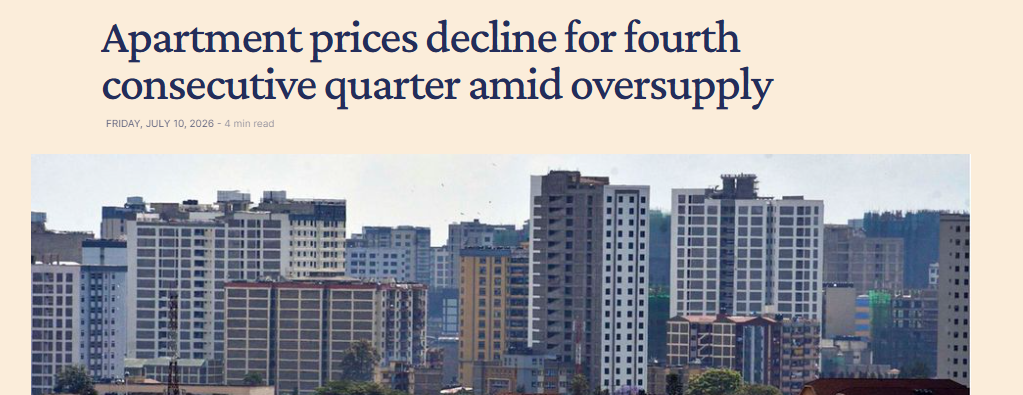
A recent Nation report carried some numbers that Nairobi’s property watchers have been talking about for a while now: apartment prices have fallen for four straight quarters, weighed down by an oversupply of flats in areas like Kilimani, Kileleshwa, and Parklands. Over the same period, the story for standalone homes — maisonettes, bungalows and villas — has gone the other way. Their value rose 8.5% in the year to March, according to the Kenya National Bureau of Statistics.
Put simply: while flats are getting cheaper because there are too many of them, standalone homes are becoming more valuable because there aren’t enough.
That gap tells you something important about where to put your money.
Why Flats Are Losing Ground
Years of dense apartment construction have flooded the market, especially in the city’s more established suburbs. With more units than buyers, developers are now discounting prices and offering flexible payment plans just to move stock. Good news if you’re renting — not so good if you already own one and were counting on it to appreciate.
Why Standalone Homes Are Winning
Standalone housing is a different game entirely. It’s capital-intensive — you need real land, not just a floor plate — so supply has stayed tight even as demand keeps climbing. A recent KNBS survey backs this up: 63.1% of Kenyans hoping to own a home said they’d choose a bungalow if given the choice, with maisonettes a distant second at 23%. Apartments came in last, at just 9.5%.
Kenyans, in other words, aspire to own land and build on it — not to own a floor in someone else’s building. And when demand consistently outpaces supply, prices only move in one direction.
Where Wilper Ventures Comes In
This is exactly the gap we’ve built our business around. Instead of adding to an oversupplied apartment market, we help you get in early on the asset class that’s actually appreciating: land, in the right location, at a price that still makes sense today.
Introducing Upeo Ridge Phase 1 — our newest plot offering, retailing from KSh 450,000.
- Location: Nachu, Mikuyuni, along the Ngong–Suswa Road, Kiambu County
- Access: From Kikuyu town, the project is reachable via Ruthigiti Road
- What it means for you: A serviced plot in a fast-growing corridor, at a price point that lets you build your own maisonette, bungalow, or villa on your terms and timeline — capturing the same appreciation trend the KNBS data confirms is already underway
Buying a plot with Wilper Ventures isn’t just about owning land. It’s about positioning yourself ahead of a market shift that’s already showing up in the national statistics. While apartment values stagnate under oversupply, standalone homes — the kind you can build for yourself, exactly the way you want them, on land you fully own — are the ones climbing in value.
The smartest time to buy land is before everyone else notices the trend. Right now, the trend is right there in the numbers.
Ready to secure your plot at Upeo Ridge Phase 1? Get in touch with the Wilper Ventures team today, and let’s walk the site together.

This week, President Ruto commissioned a new flyover at the Ngong Road–Naivasha Road junction, a Ksh 3.8 billion project aimed at clearing one of the most persistent traffic bottlenecks on this route. It is part of a wider push, alongside other major upgrades happening across Nairobi’s road network, all pointing in the same direction: getting in and out of the city faster.
For Ngong, and by extension Kimuka, this matters more than it might at first seem.
Traffic has always been the main hesitation for people considering Ngong, whether to relocate or to invest in land further along the corridor. With this bottleneck addressed, that concern is easing. The drive to Kimuka, about 40 kilometres from Nairobi CBD and just past Ngong town, becomes much more manageable and attractive to anyone weighing whether to make the move or invest in land here.
This is usually how it plays out with infrastructure. Once a road improves, an area that felt too far suddenly becomes workable, and investment tends to follow shortly after. The corridors that benefit most are the ones where this happens early, before everyone else notices. With the Ngong Road improvements still fresh, Kimuka is positioned right at that early stage.
Kimuka itself has plenty going for it already. It sits in the cooler, quieter shadow of the Ngong Hills, with a growing trading centre, schools, and basic infrastructure like electricity and piped water already in place. The soil drains well, which is good news for anyone looking to build. And land here is still priced reasonably, especially compared to areas closer to Nairobi, where prices have already climbed.
What this easier access really opens up is more options. More families are considering a quieter place to settle. More investors are looking at land that could appreciate as the area continues to develop. More developers and businesses are paying attention to a corridor that is becoming easier to reach. All of that tends to bring more activity and more investment into Ngong-Kimuka over time.
This is exactly the opportunity Wilper Ventures Limited is offering through Neema Gardens, our residential plots along the Ngong–Suswa Road in Kimuka. Each plot measures 50 by 100, sits just off the tarmac, and comes with ready individual freehold title deeds, with transfer completed within 90 days. The neighborhood already has power, water, and access roads in place, and is close to schools, a local market, and Karen Shopping Centre.
We currently have plots going for Ksh 1.2 million, with a flexible payment plan of up to six months and discounted rates for cash buyers. Whether your plan is to build a home, hold the land as an investment, or simply secure a stake in a corridor that is clearly on the rise, this is a good time to take a closer look.
As always, we encourage every buyer to do their own due diligence: confirm the title through an official Lands Registry search, verify the boundaries on the ground, check zoning requirements, and make sure you are dealing with a credible seller. We are happy to support you through that process.
If you have been considering Ngong, now is a good time to act. Reach out to Wilper Ventures Limited to book a site visit to Neema Gardens or to find out more about available plots and payment plans.
Wilper Ventures Limited specialises in secure, high-potential land investments in Kenya. For inquiries, contact us at sales@wilperventures.com or call +254 114 333 888. Visit wilperventures.com to explore available plots.

Picture this: It’s a Tuesday afternoon. You’re somewhere in your late 60s. Your knees have opinions about staircases. Your doctor has opinions about red meat. And somewhere in a city you no longer commute to, a much younger person is sitting at a desk that used to be yours, earning a salary that used to be yours, completely unbothered by your existence.
Karibu sana retirement. The question is: what did you build while you had the salary?
This is a conversation that Kenyans are famously reluctant to have. We are magnificent at working hard. We are brilliant at educating our children. We are deeply committed to looking fine at funerals. But planning for our own financial future — specifically, accumulating land before we can no longer earn the money to buy it — is an area where too many of us arrive late.
So let’s begin this conversation.
The Retirement Reality in Kenya
Let’s be direct about what retirement looks like for the average Kenyan who did not plan.
The NSSF, when it eventually pays out, typically provides a lump sum or monthly benefit that is comforting in theory and humbling in practice. The pension from your employer (if you were lucky enough to have one) will stretch your lifestyle only if your lifestyle has already dramatically compressed. The children you educated so beautifully — and who you are quietly hoping will take care of you — are dealing with school fees, mortgages, and cost of living pressures of their own. They love you. They are also financially overstretched.
None of this is pessimism. It’s a description of a system that was not designed to replace your working income in retirement. Which means you have to design that replacement — deliberately, early, and with the right assets.
Why Land Specifically?
There are many ways to build wealth. Stocks, bonds, SACCOs, business ownership, foreign currency — all valid, all useful.
But land has a set of properties that make it uniquely suited to the Kenyan retirement context:
It doesn’t depreciate. A piece of land in a growing corridor does not lose value the way a car does, the way a business can, or the way a pension fund can when a market corrects badly. It sits there, anchored to the earth, increasing in value as the population grows around it, as infrastructure arrives, as demand for housing and commercial space expands.
It generates income. Land can be rented out as a plot. It can be developed into rental units that generate monthly income for the rest of your life — without you lifting a physical finger. A rental property built on land you own outright, with no mortgage, is one of the most powerful passive income machines available to the ordinary Kenyan.
It is tangible and undilutable. You can see your land. You can walk on it. Nobody can silently dilute its value by issuing more shares or adjusting a balance sheet. What you bought is what you own — and nobody is taking it from you as long as your title deed is clean.
It is legacy. At the end of your life, land is among the most powerful assets you can pass to your children. It is an inheritance that generates income, not just sentiment.
The Case for Buying Before 50
Why 50 specifically? Let’s work backwards.
The average Kenyan retires somewhere between 55 and 65. If you buy land at 49, you have 6 to 16 years of employed income to develop it, pay off any financing, and set it up as a productive income-generating asset before you need it to carry your retirement.
If you buy at 55 — retirement age — you’re buying with diminished earning capacity, possibly drawing from savings, and you have no runway to develop before the income stops. You’ve just bought an appreciating asset you can’t yet leverage.
If you buy at 35 — ideal scenario — you have 20 to 30 years of compounding appreciation, development time, and rental income to build real wealth before you slow down.
The pattern is simple: the earlier you buy land, the more time it has to work for you. But 50 is a meaningful deadline because it’s the last point at which you have enough earning years ahead to truly capitalise on what you buy.
What Does a Land-Based Retirement Portfolio Look Like?

Scenario: You buy a 50×100 plot today for KSh 850,000 in a satellite town.
Year 1–3: Plot purchased, title secured, fenced. You begin a phased development — perhaps a small rental unit or a two-roomed structure that generates initial income and covers ground rates and security costs.
Year 3–7: You develop the main rental structure — 6 to 8 bedsitters or 2 to 3 one-bedroom units. Construction cost: approximately KSh 2.5 million to KSh 3.5 million, financed through a combination of savings and a small development loan.
Year 7 onward: Rental income begins. At KSh 50,000 to KSh 80,000 per month gross (a reasonable figure for a well-located satellite town rental development), you’re generating KSh 600,000 to KSh 960,000 per year from a land investment that cost you KSh 850,000 at entry.
By retirement, your rental units are fully paid off, your asset has appreciated significantly, and you have a monthly income stream that requires only property management — not active employment.
Two Plots Are Better Than One
The most confident retirees we encounter at Wilper Ventures are not the ones who bought one plot. They’re the ones who bought two or three — at different times, in different locations, with different development timelines.
One plot for the home. One plot for rental income. A third, perhaps, held for capital appreciation in a high-growth corridor like Konza, which you’ll sell in 15 years for a multiple of the purchase price.
This is portfolio thinking applied to land, and it’s available to anyone earning a regular salary who is willing to make the decision and act on it with consistency.
You don’t need to be wealthy to build a land portfolio. You need to be deliberate.
The Biggest Retirement Mistake Kenyans Make
We’ve seen it more times than we can count. A hardworking Kenyan spends their career educating children, driving a reasonable car, living in a rented apartment in a nice neighbourhood, and generally looking like someone who is doing well.
They arrive at retirement with no land investment. No passive income. A NSSF payout that covers perhaps two years of modest living. And children who are doing their honest best to help but cannot replace 30 years of salary.
The tragedy is not that they couldn’t afford land. In most cases, they could have — at some point in their working life, there was a window. A KSh 300,000 plot in 2005. A KSh 500,000 plot in 2012. A KSh 850,000 plot in 2026. But the immediate always competed with the important, and the immediate won — year after year — until the window closed.
A Specific Word for Those in Their 30s and 40s Reading This
You are in the prime window. Your income is growing. Your financial obligations — while real — have not yet peaked. Your body still forgives the bad decisions you haven’t made yet.
A 50×100 plot purchased today in the right location is not a luxury or a distant aspiration. It is a completely achievable financial decision that will compound quietly in the background for the next 20 to 30 years while you live your life.
The payment doesn’t have to be cash in full. Payment plans exist. Development financing exists. SACCO loans exist. The structure of how you pay matters less than the decision to start.
And for Those Approaching 50
You are not too late. We want to say that clearly.
A plot bought today, developed over the next 5 to 10 years before retirement, and producing rental income by the time your employment income stops — that is still a life-changing financial decision. The window is narrowing, but it has not closed.
What you should not do is let the discomfort of starting late become the excuse that keeps you from starting at all. Late is better than never. A rental income at 65 from a development you built at 52 is infinitely better than no rental income at all.
What Wilper Ventures Offers the Serious Planner
We understand that buying land for retirement is not the same decision as buying land on impulse. It requires confidence in the title, clarity on the location’s growth trajectory, and a partner who will give you honest guidance rather than just close a sale.
That’s what we do. We know our corridors. We know which plots have the fundamentals — access to infrastructure, clean titles, proven appreciation trends — that make them appropriate for a retirement investment strategy. And we’re happy to have that conversation without pressure and without shortcuts.
Your retirement is too important for shortcuts.
What Makes a Satellite Town Worth Your Money?
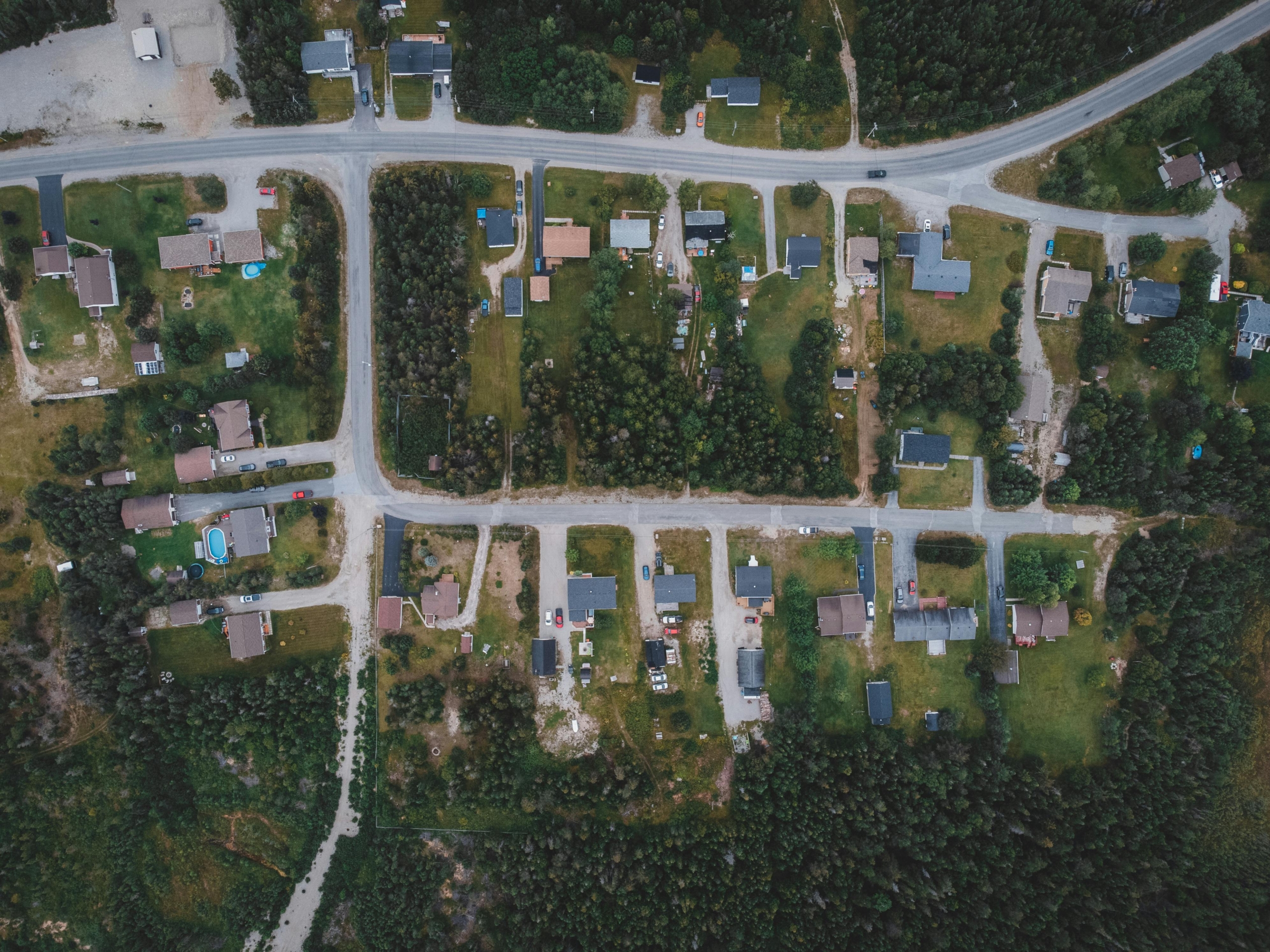
Welcome to the era of the satellite town. And if you’re a serious Kenyan investor, this is the conversation you should have been having at your last family dinner instead of arguing about who ate the last piece of nyama.
A satellite town is a fast-growing urban area that orbits Nairobi, feeding off its economic energy while offering something the city can no longer afford to give: space, affordability, and room to grow.
Let’s go town by town.
1. Ngong — Karen’s Shadow
Ngong is the town that has been sitting quietly next to Karen — Nairobi’s most prestigious suburb — for years, patiently waiting for the world to notice it. In 2026, the world is noticing.
Sitting just 22 kilometres southwest of Nairobi’s CBD, Ngong is not a remote gamble. It is a well-connected, fast-appreciating town that offers you the lifestyle proximity of Karen without the Karen price tag. If you live in Ngong, you’re a short drive from the Ngong Hills — one of Kenya’s most scenic landscapes — and an equally short drive from some of Nairobi’s finest schools, hospitals, and shopping centres on Ngong Road.
What has changed in recent years is the infrastructure story. The Ngong–Suswa Road expansion is transforming connectivity in and out of the town, opening up routes that previously required patience and a reliable suspension. The Government’s Affordable Housing Programme has directed investment toward Ngong in a serious way.
The result? Land that was affordable two years ago is appreciating with purpose. Land that is still affordable today — like the prime 50×100 plots Wilper Ventures is offering from KSh 850,000 — is sitting at what analysts quietly call a window price: the price before the infrastructure fully reflects in the market. Ngong offers the best balance of infrastructure growth, population inflow, and affordability of any Nairobi satellite town right now.
The buyers coming into Ngong are not speculators. They are families priced out of Karen and Lang’ata, young professionals who want a cooler climate and a quieter life, and investors who understand that you don’t wait for a location to be famous before you buy — you buy when it’s becoming famous.
The investor’s edge: Ngong is still transitioning through its growth phase. The major catalysts — road expansion, institutional investment, affordable housing projects — are not yet fully priced into land values. This creates a clear, time-sensitive window for capital gains. It will not stay open forever. These windows never do.
2. Ruiru.
Ruiru sits along the Northern Bypass and Eastern Bypass interchange, making it one of the best-connected towns outside Nairobi. The Thika Superhighway effect has been compounding here for years — residential estates have mushroomed, roads have been tarmacked, and the town has its own heartbeat now. Schools, hospitals, malls, restaurants — Ruiru is no longer a stepping stone to Nairobi. It’s a destination.
What does this mean for an investor buying today? It means you’re not buying into speculation — you’re buying into an established growth corridor with demonstrated appreciation. Prices have risen, yes, but the fundamentals haven’t changed. Ruiru is still a fraction of what you’d pay for equivalent access in Nairobi, and demand from young families, rental tenants, and small businesses keeps climbing.
The investor’s edge: Rental yields in Ruiru remain attractive because demand from Nairobi commuters stays perpetually high. A plot purchased today, developed into a rental unit over two to three years, generates consistent monthly income while your asset appreciates underneath you. This is the model that built a lot of quiet wealth in Nairobi’s orbit over the last decade.
3. Juja.
Juja has been doing something very clever — growing quietly while everyone was busy watching Ruiru. The presence of JKUAT (Jomo Kenyatta University of Agriculture and Technology) means Juja has a permanent, self-renewing tenant base of students, lecturers, and university support staff. Unlike other tenant markets that fluctuate, university towns are reliable. Students arrive every year. Parents want somewhere decent for their children. Lecturers want somewhere reasonable to sleep.
Add the Kenyatta Road estates, a growing residential community, and improving infrastructure, and you have a town that punches consistently above its weight class.
The investor’s edge: Student rental yields in Juja can reach 9–15%, which is frankly embarrassing compared to what you’d earn leaving that money in a fixed deposit account. For an investor whose goal is income — not just appreciation — Juja makes a compelling case.
4. Kikuyu (Nachu Area)
Let’s talk about Kikuyu — specifically the Nachu area, which is having a moment that most people haven’t fully noticed yet. And that, as any seasoned investor will tell you, is exactly when you want to be paying attention.
Kikuyu sits along Waiyaki Way and the Southern Bypass, giving it exceptional access to Nairobi’s CBD without the Nairobi price tag. The town is well served by schools — Alliance High School, Kianda School, Makini — and medical facilities, including PCEA Kikuyu Hospital. It has the infrastructure of a mature satellite town, but pockets within it are still priced like it’s an emerging one.
Nachu is one of those pockets — and it is about to get significantly more connected. In October 2025, Kikuyu MP Kimani Ichungwa officially launched construction of the Lusigetti-Ndacha-Mbomboini-SGR Road, a strategic route that connects Nachu through to the SGR station. This is a KeRRA-managed project in Kiambu County’s 2025/2026 Annual Development Plan — with public participation done and a contractor on site. There is also the Nachu–Ngong–Kimuka tarmac road, which connects this area to the Ngong–Kimuka corridor, where Wilper also operates.
What does this mean for land prices in Nachu? Think about what happened to land near any major road project in Kenya’s recent history. Then buy before the road is finished, not after.
Wilper Ventures is currently offering plots in the Nachu area from KSh 450,000 — one of the most affordable entry points into a fundamentally sound, infrastructure-backed location within Nairobi’s growth orbit. This is the price that, in five years, people will tell their friends they wish they had acted on.
5. Konza.

If Ngong is where you win in the near term, Konza is where you build a legacy.
Konza Technopolis — Kenya’s Silicon Savannah. It is a 5,000-acre master-planned smart city approximately 60 kilometres southeast of Nairobi, sitting along the Nairobi-Mombasa Highway. The infrastructure is real. The government commitment — sustained across multiple administrations — is real. And the surrounding land market is very, very awake.
The investor’s edge: Konza is a planned city, which means infrastructure is intentional — not accidental. Roads, utilities, commercial zones, digital backbone — it’s all designed in advance and funded in stages. You’re not hoping infrastructure will come. You’re buying ahead of infrastructure that’s already on a map, already allocated a budget, and already under phased construction. That is as close to a guaranteed appreciation story as real estate offers.
The Pattern Every Smart Investor Recognises
Look across all five towns on this list and you’ll see the same pattern at different stages:
Infrastructure arrives → Population follows → Demand grows → Prices rise → Early investors celebrate.
The question is never if these towns will grow. The question is when — and whether you’re positioned before or after the price reflects the answer.
Ngong and Nachu are in the window right now — infrastructure underway, prices not yet caught up. Ruiru and Juja are established corridors still offering yield. Konza is the long game for the patient capital that compounds into generational wealth.
You don’t need to pick just one. Many deliberate Kenyan investors are building portfolios across two or three of these corridors — different risk profiles, different timelines, different purposes. One plot for living. One for rental income. One for appreciation.
What you should not do is wait for absolute certainty before acting. In property, by the time everyone agrees a location is great, the great prices are already gone. The people who win are the ones who read the infrastructure map, trust the growth pattern, and act while others are still in the meeting discussing it.
What Wilper Ventures Brings to This Conversation
We are not a company that sells land from behind a desk. We work in these corridors — specifically the Ngong–Kimuka corridor and the Nachu area in Kikuyu — every day. We know which plots sit on tarmac, which titles are clean and ready, and which locations have the fundamentals to reward patient capital.
We’re currently offering:
- Prime 50×100 plots in Ngong from KSh 850,000 — positioned in one of Kenya’s fastest-appreciating satellite towns, with infrastructure catalysts still coming online.
- Plots in Nachu, Kikuyu from KSh 450,000 — one of the most affordable, fundamentally sound entry points in Nairobi’s growth orbit, with a new strategic road under construction right now.
We’re not just selling you land. We’re helping you make a decision you’ll look back on in ten years and feel genuinely clever about.

You’ve seen the listing. “Prime 50×100 plot in Kimuka Ngong” by Wilper Ventures Ltd, ready title deed, tarmac road, electricity, water. Price: KSh 850,000. Call now.”
Your heart speeds up a little. You start doing mental calculations. You imagine the house. Maybe a gate with your initials on it in that curly iron font. A lawn where your children can play. A dog named something presidential like Churchill or Uhuru.
Then comes the question that stops the dream in its tracks: What can I actually build on this thing?
You’re not alone. This is the question every first-time buyer in Kenya asks, and almost nobody answers properly. Today, we’re going to fix that — with honesty, with numbers, and with just enough humour to make sure you stay awake until the end.
First — Measurement.
A 50×100 plot means 50 feet wide by 100 feet deep. In metres, that’s approximately 15 metres by 30 metres, giving you a total area of roughly 464 square metres, or just over one-tenth of an acre.
This is also commonly called a 1/8 acre plot in Kenyan property listings, though the actual conversion is closer to 1/9.4 of an acre. When a developer says 1/8 acre, they’re being generous with the rounding. You’ve been warned.
Now, here’s what a lot of buyers don’t factor in before they start sketching dream homes on serviettes: the entire 464 square metres is not yours to build on.
County setback regulations in most Kenyan jurisdictions require you to leave space at the front, back, and sides of your plot. The exact figures vary by county and zoning, but as a general guide, you’re typically working with a buildable footprint of around 200–250 square metres once setbacks are observed. This is still very respectable land, but it means your building needs to be thoughtful, not sprawling.
So What Can You Actually Build? Let’s Go Through the Options.
Option 1: The Family Home

Yes, you can absolutely build a decent family home on a 50×100 plot — and not some cramped, apologetic structure either. A well-designed 3-bedroom bungalow fits comfortably within the footprint, with room for a sitting room, kitchen, two bathrooms, and a small outdoor area.
If you want to go vertical, a 2-storey maisonette lets you extract more from the same footprint. You could have 3 to 4 bedrooms, a spacious living area, a domestic staff quarter (DSQ), and still have space for a small garden and parking.
This is the option for the person who is done renting — the one who has looked at their landlord one too many times and decided that enough is enough, and that their money deserves to work for them from now on.
What it costs to build (rough guide): A decent 3-bedroom bungalow with good finishes will run you approximately KSh 2.5 million to KSh 4 million, depending on materials, location, and whether your fundis are the kind who show up on Mondays. A 2-storey maisonette can run KSh 4.5 million to KSh 7 million.
Factor in architect fees (approximately 5–10% of construction cost), structural engineer, and county approval fees. These are not optional — they are the difference between a home and a liability.
Option 2: Rental Units
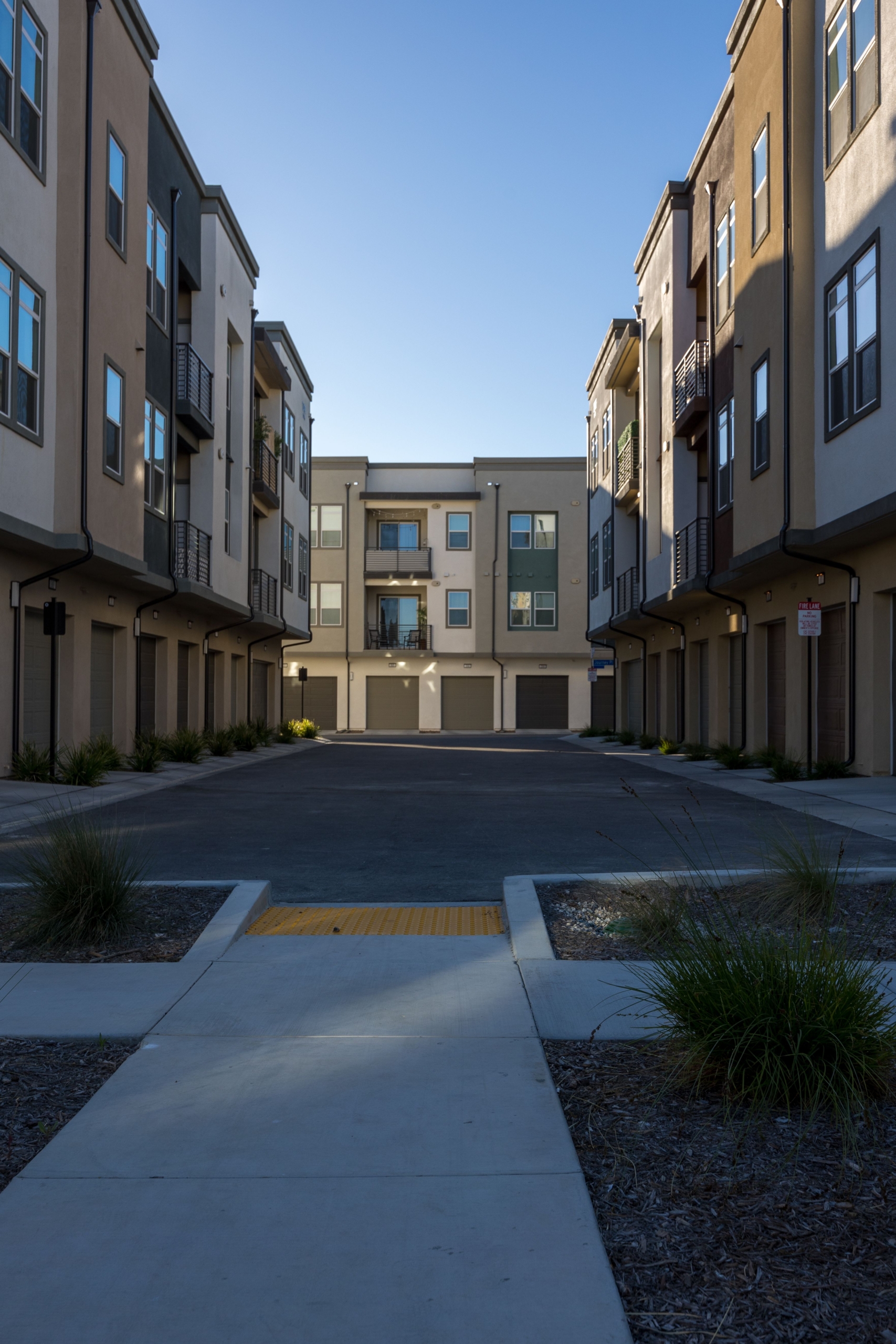
Here’s where it gets interesting for the investor who is less interested in living on the plot and more interested in making money from it.
A 50×100 plot can accommodate a rental development that generates monthly income while your asset appreciates. The most common formats:
Bedsitters / Studio Units: You can fit a block of 6 to 10 bedsitters on a 50×100 plot, depending on the design and whether you go single or double storey. In a town like Juja, Ruiru, or Kitengela, each bedsitter can rent for KSh 5,000 to KSh 10,000 per month. Run the numbers: 8 bedsitters at KSh 7,000 each is KSh 56,000 per month. That is KSh 672,000 per year from a plot you bought for KSh 850,000. You’ve almost recovered your land cost in rental income alone within two years — before we even talk about what the land itself is worth by then.
One-Bedroom Apartments: If you’re in a slightly more established area with tenants who earn a bit more — think young working professionals — a block of 4 one-bedroom apartments on two floors is achievable. Rents in satellite towns for a decent one-bedroom range from KSh 12,000 to KSh 25,000 depending on finishes and location.
DSQ Units: Some buyers build their own home but add one or two DSQ units at the back of the plot to rent out. The rental income offsets the mortgage or construction loan repayments. Clever? Very. Underutilised? Also very.
Option 3: Commercial Development.

If your plot is on or near a busy road or in a developing commercial zone, you might want to reconsider putting a house on it altogether.
A well-placed 50×100 plot in a commercial corridor can support a row of shops, a small office block, or a mixed-use development (shops on the ground floor, residential above). In satellite towns with growing populations and not enough commercial space to serve them, a row of three to four shops can generate KSh 20,000 to KSh 60,000 per month depending on the location and what services the community needs.
Before you pursue this route, check the zoning on your title deed and the local development plan. Not every 50×100 plot is zoned for commercial use, and building commercial on a residential zone without approvals is the kind of decision that ends with demolition notices and regret.
Option 4: Develop in Phases
Nobody said you have to build everything at once. In fact, some of Kenya’s best real estate investors are masters of the phased approach.
Phase 1: Buy the plot. Secure the title. Fence it. Put up a small caretaker unit if the area warrants it.
Phase 2: Save or finance. Build the first rental unit or the basic structure of your home.
Phase 3: Use income from Phase 2 to fund Phase 3. Repeat.
This approach is not a compromise — it’s a strategy. The land is appreciating while you build. You’re not borrowing everything at once. You’re not stretching your cash flow to the point of stress. You’re building at the pace of your earnings, and each phase makes the next one easier.
Common Mistakes to Avoid.
Mistake 1: Building without county-approved plans. We understand the urge to save the architect fees. We really do. But
unapproved structures can be flagged, fined, or demolished. The county is not sentimental about this. Get your plans
approved.
Mistake 2: Underestimating construction costs. That quote your cousin’s fundi gave you? Add 20–30% and you’ll be closer to
reality. Material prices move. Labour disputes happen. Rain delays timelines. Budget for contingency the way you
budget for certainty.
Mistake 3: Ignoring setbacks and not consulting a surveyor. Your plot beacons tell you exactly where your boundaries are.
Some buyers discover — mid-construction — that their fence was encroaching on a neighbour or a road reserve. This
is the kind of drama that turns neighbours into enemies and projects into courtroom exhibits. Hire a licensed surveyor
before you break ground.
Mistake 4: Building what you want instead of what the market wants. If you’re building for rental income, build what tenants
in your target area are willing to pay for — not your personal aesthetic preferences. Marble countertops in a bedsitter
in Juja will not fetch marble counterpart rent. Match your finishes to your market.
The Bottom Line
A 50×100 plot is not a limitation. It’s a canvas — and the painting depends entirely on your goals, your budget, and how clearly you’ve defined what success looks like for you.
Whether you’re building your dream home, creating a rental income stream, or developing a phased investment that grows with you, a well-located 50×100 plot at the right price is one of the most versatile financial tools available to the average Kenyan.
At Wilper Ventures, we sell plots with purpose — with clean titles, in locations where development makes sense, and with the kind of informed guidance that helps you avoid the expensive mistakes that make people write bitter Facebook posts about the real estate industry.
Your 50×100 is waiting. The only question is: what will you build?
There is a kind of silence that falls over Kenya on the 1st of June – MADARAKA DAY
Not the silence of emptiness — but the silence of weight. Of memory. Of something that happened before most of us were born, that we were handed without fully understanding the cost.
In 1963, this country bled for its ground.
Not metaphorically. Not poetically. Literally.
Men disappeared into forests and did not come back. Women were detained, beaten, stripped of everything except the conviction that this soil — this specific, red Kenyan soil — was worth suffering for. Families were separated. Crops were burned. Entire communities were pushed off the land they had farmed for generations by a system that had decided, simply, that the ground beneath their feet belonged to someone else.
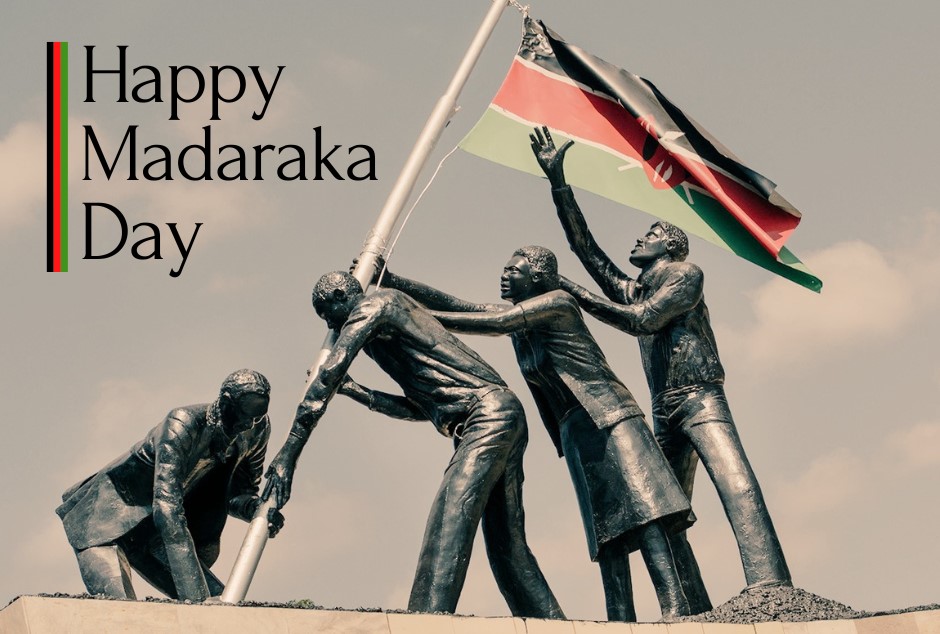
They fought anyway.
They sweated through years of resistance, of organizing in secret, of scratching plans in the dirt with sticks because paper was too dangerous. They bled in forests, in detention camps, in courtrooms where the verdict was always already written. They buried their friends and kept moving.
And on the 1st of June, 1963 — Madaraka — Kenya stood up.
Self-rule. The flag. The nation. Ours.
That is what this day carries. Every single year.
But Here Is What We Don’t Say at the Celebrations

The founding generation did not fight for a flag.
They fought for what the flag represented — the right to stand on this earth and say: I belong here, and this belongs to me. The right to build something on their own terms. To plant, to harvest, to pass it down. To look their children in the eye and say: you will not start from nothing. I have already held the ground.
That was the freedom they were bleeding for.
Not a public holiday. Not a brass band. Not a presidential address from a podium.
Land. The right to own it, to work it, to root a family in it so deeply that no one — no landlord, no government, no circumstance — could uproot them.
They understood something that our generation has quietly begun to forget: that a people without land are a people who are still, in some quiet and invisible way, under someone else’s authority. You can have a passport. You can have a degree. You can have a salary deposited into your M-Pesa every month.
But if you do not own the ground you stand on, someone else controls the terms of your life.
The colonial system knew this. It is why land was always the first thing taken, and the last thing returned.
The Fight Did Not End in 1963. It Was Handed to Us.

Here is the thing about freedom — it is not a destination. It is a baton.
The generation of Kimathi, of Kenyatta, of the thousands of unnamed men and women who gave everything they had — they carried that baton as far as they could. They ran through the hardest terrain, against the heaviest resistance, and they crossed a finish line that cost them immeasurably.
Then they handed it to us.
And we got comfortable.
We moved to Nairobi. We found jobs. We started paying rent — month after month, year after year, sending money to landlords, building their wealth, reinforcing their security, while telling ourselves that one day we would do something about our own.
One day became five years. Five years became a decade. The baton sat in our hands while we convinced ourselves the timing was not right, the money was not enough, the process was too complicated.
Meanwhile — the land remained. Waiting.
The question this Madaraka Day is not whether our fathers were brave enough.
We know they were. They proved it in ways most of us will never be tested.
The question is whether we are.
Your Generation’s Fight Is Not in the Forest. It Is in the Title Deed.
You will not be asked to go into the Aberdares. You will not be asked to sacrifice what they sacrificed.
Your fight is quieter. But it is no less real.
It is the fight against complacency — against the voice that says wait, not yet, maybe next year. It is the fight against a system that makes renting feel normal and ownership feel out of reach. It is the fight to look your children in the face, the way the founding generation looked at theirs, and say: I did not leave you empty-handed. I held the ground.
That is what land ownership is, when you strip away the investment language and the market projections and the price-per-acre comparisons.
It is freedom that lasts longer than you do.
When you own land — titled, legally yours, registered in your name — you break a cycle. You stop being subject to someone else’s decision about whether you can stay. You stop starting over. You create a foundation so solid that the generation after you begins already standing on something, already rooted, already free in a way that cannot be taken back.
Your grandfather’s generation bled so that Kenya could rule itself.
You buying land is how your family rules itself.
It is the same fight. Smaller scale. Equal stakes.
The Ngong Hills Have Watched All of This
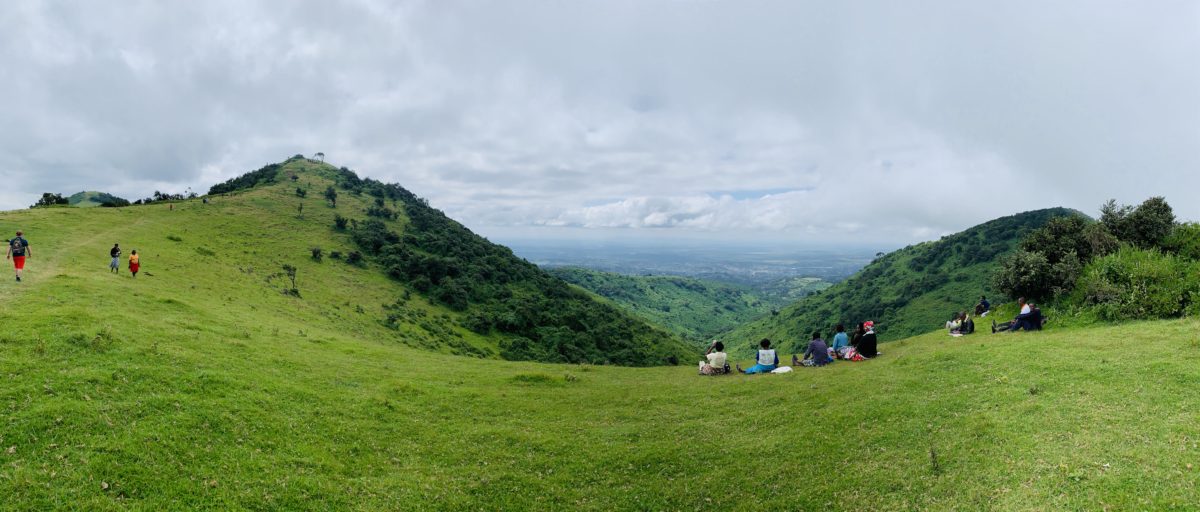
The Ngong Hills have stood over this part of Kenya for longer than any of us have been alive.
They watched the resistance. They watched independence. They watched Nairobi grow from a railway camp into a city of millions. They have watched generation after generation of Kenyans look at this land — at the clean air, the red soil, the wide horizon — and say someday.
At Wilper Ventures, we work in the corridor between Ngong and Kimuka. It is not accidental. This land carries something. It is close enough to the city that life stays connected, far enough that it still breathes. The kind of place where you can build a home and actually feel it — the quiet, the space, the sense that the ground beneath you is solid.
Our Neema Gardens developments — Phase 1 and Phase 2 — are 50×100 residential plots with ready title deeds. Not promises. Not off-plan paperwork. Title deeds. The thing the founding generation fought for. In your name.
Flexible payment plans mean this is not a conversation reserved for the wealthy. It is a conversation for anyone who has decided that this generation — their generation — will not keep postponing the freedom that was paid for in blood and sweat before they were born.
This Is Your Madaraka
June 1st, 1963, was Kenya’s Madaraka.
June 1st, 2026, can be yours.
Not because of the date — but because today is the day you let the weight of this history settle on you properly. Not as a burden, but as a calling. As an inheritance that demands something of you in return.
The men and women who built this nation’s freedom were not waiting for perfect conditions. They were not waiting until they had more resources, more certainty, more comfort. They moved with what they had, toward something they believed in — a Kenya where they and their children could stand on their own ground and be answerable to no one but themselves.
That Kenya is still possible. It starts with one plot. Your plot.
Book a site visit. Walk the land. Stand on it. Feel what it means to say — even just to yourself, quietly, honestly — this could be mine. This will be mine.
Then make it so.
Your fathers bled for Kenya’s land. What are you doing with yours?
Happy Madaraka Day, Kenya. May this generation finish what was started.
When Kenyans talk about buying land, the phrase that comes up most often is simple: “Does it have a title deed?”
And it makes sense. The title deed is the document most people associate with land ownership. It has your name on it. It looks official. It feels like proof.
But here is something that thousands of buyers — including educated, experienced people — discover too late: a title deed alone is not enough to confirm that a piece of land is legally yours, free of disputes, or safe to buy.
There is another document that sits above the title deed in legal authority. It predates the title deed, outlives it, and contains information the title deed will never show you. It is the document that courts turn to when titles are disputed — and it is the document that can confirm, or completely unravel, what a title deed appears to say.
It is called the Green Card.

If you have never heard of it, you are not alone. Most buyers haven’t. But by the time you finish reading this guide, you will understand exactly what the Green Card is, how it differs from a title deed, why both documents matter, and what you should always do before buying any piece of land in Kenya.
Part 1: The Title Deed — What It Is and What It Does
What is a Title Deed?
A title deed is the official government-issued document that confirms who currently owns a specific parcel of land in Kenya. It is issued by the Ministry of Lands and Physical Planning and is registered under the Land Registration Act, 2012 — the law that currently governs land ownership in Kenya.
Think of the title deed as your identity card for the land. Just as a national ID confirms who you are as a person, the title deed confirms who owns a particular piece of land at a specific point in time.
When a land transaction is completed — when someone buys land, inherits it through succession, or receives it as a gift — the title deed is updated or reissued to reflect the new owner. The person walking away from the transaction holds the title deed in their name.
What Information Does a Title Deed Contain?
A standard title deed in Kenya contains the following:
- The title number (the unique identifier for that specific parcel of land)
- The name of the current registered owner
- The land reference number (LR number), which identifies the parcel in the national land registry
- The size of the land (acreage or square metres)
- The location of the land (county, district, division)
- The nature of ownership — freehold or leasehold
- For leasehold titles: the lease period (e.g., 99 years), the commencement date, and the ground rent payable
- The date of issue and the signatures of the relevant land registrar
Types of Title Deeds in Kenya
Kenya recognises several types of title deeds, reflecting the country’s history of different land registration laws:
1. Freehold Title Deed (Absolute Title) This is the most powerful form of ownership. A freehold title gives
you permanent, unlimited ownership of the land — with no time restriction, no rent payable to the
government, and the broadest possible rights to use, develop, and transfer the land. Most private
residential plots in peri-urban areas like Ngong and Kimuka are sold on freehold titles.
2. Leasehold Title Deed (Certificate of Lease) Here, the government (through the National Land
Commission) retains ultimate ownership of the land and leases it to you for a defined period —
typically 33, 50, or 99 years. Urban land, especially in Nairobi’s commercial zones, is frequently held
under leasehold. You pay annual ground rent and must comply with the terms of the lease. At the
expiry of the lease, you can apply for renewal — but it is not automatic.
Important: All 999-year leases in Kenya were automatically converted to 99-year leases when the 2010
Constitution came into effect. If you own or are buying land with a 999-year leasehold title,
understand that it is legally treated as 99 years.
3. Sectional Title Deed This applies to individual units within a larger building — apartments, flats, or
offices within a development. Each unit owner holds a sectional title deed confirming ownership of
their specific unit, while common areas (lifts, lobby, parking) are shared.
What Does a Title Deed Prove — and What Doesn’t It Prove?
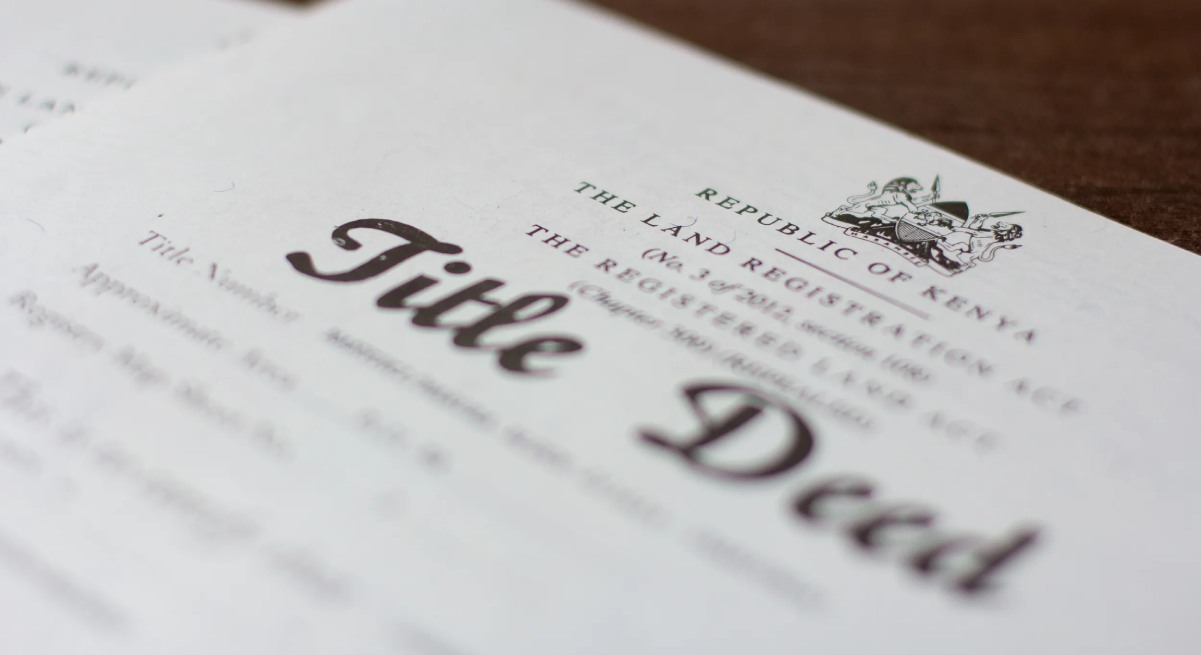
This is the crucial part that most buyers misunderstand.
A title deed proves who is currently registered as the owner of a piece of land. It does not, by itself, prove:
- That the land was legally allocated in the first place
- That the previous transfers were conducted lawfully
- Whether there are active charges, mortgages, or caveats on the land
- Whether there are ongoing disputes or court orders involving the land
- Whether the title has ever been cancelled, replaced, or altered
- Whether the same land has been fraudulently sold to multiple buyers
A title deed is only as strong as the history behind it. And that history lives somewhere else entirely.
Part 2: The Green Card — Kenya’s Master Land Record
What is a Green Card?
The Green Card is the official master record for a parcel of land, maintained at the Ministry of Lands and Physical Planning (and the relevant county land registry). It is the foundational document from which the title deed is derived.
While the title deed tells you who owns the land today, the Green Card tells you everything that has ever happened to that land — from the moment it was first registered to the most recent transaction. It is the complete, unbroken story of a parcel of land, written in chronological order.
Why “Green Card”? The original documents were printed on green paper — hence the name. Today, certified copies issued by the Ministry of Lands are usually printed on white paper, but the name has stuck. Do not confuse this with the American immigration document of the same name — this is entirely different.
The Green Card is not given to landowners. It stays permanently at the Land Registry. You cannot take it home. What you can do — through a licensed advocate or surveyor, or as the property owner yourself — is request a certified copy or conduct a formal search against it.
What Information Does a Green Card Contain?
The Green Card is divided into three distinct sections, each capturing a different layer of information about the parcel:
Section 1: The Property Section. This records the physical details of the land:
- The title number and LR (land reference) number
- The size of the parcel (in acres or hectares)
- The boundaries and the map sheet number (which references the survey plan)
- Whether the land is near or within a protected zone, road reserve, riparian area, or government reservation
- Any subdivisions that have taken place — including the original “mother title” and the resulting sub-parcels
Section 2: The Proprietorship Section This is the ownership history — the part most buyers want to see:
- The names of every person or entity that has ever been registered as the owner of this land
- The date each person became the registered owner
- How ownership was acquired each time (purchase, succession, court order, government allocation, gift)
This section creates an unbroken chain of title going all the way back to the land’s original registration. If someone claims to own land that was actually registered in another person’s name — or if ownership was transferred without following proper legal processes — the Proprietorship section will reveal it.
Section 3: The Encumbrances Section. This is arguably the most important section for any buyer:
- All charges on the land (mortgages or loans for which the land was used as collateral)
- All caveats (legal notices warning that someone has a claim on the land)
- All restrictions (limitations on how the land can be transferred or developed)
- Court injunctions or orders relating to the land
- Any discharges — formal confirmations that a previous charge or caveat has been lifted
This section answers the question: Is this land legally clean and free to be sold? A title deed will not show you any of this in real time. The Green Card will.
Part 3: Green Card vs. Title Deed.
| Feature | Title Deed | Green Card |
|---|---|---|
| What it is | Certificate of current ownership | Only accessible by the owner, advocate, or licensed surveyor |
| Who holds it | The registered owner | Permanently at the Land Registry |
| What it shows | Current owner, land size, location | Full ownership history, all transactions, encumbrances |
| Legal authority | Proof of current registration | The source document from which titles are issued |
| Can it be forged? | Yes — forgeries exist and are common | Much harder — it is the official registry record |
| Shows encumbrances? | No (not in real time) | Yes — all charges, caveats, and restrictions |
| Shows previous owners? | No | Yes — every owner since first registration |
| Shows subdivisions? | No | Yes — mother title and all sub-parcels |
| Access | Held by the owner | Only accessible by owner, advocate, or licensed surveyor |
| Cost to search | ~Ksh 500 (online via Ardhisasa) | ~Ksh 2,500 (at the Land Registry) |
| Issued by | Ministry of Lands | Ministry of Lands (never leaves the registry) |
Part 4: Why the Green Card Matters More Than Most People Realise
1. Title Deeds Can Be Forged. The Green Card Is the Authority.
Land fraud in Kenya is a significant and well-documented problem. Sophisticated fraudsters are capable of producing convincing fake title deeds — complete with stamps, signatures, and official-looking paper. A buyer who relies only on a visual inspection of a title deed is exposed to this risk.
The Green Card, by contrast, is the official source record. It lives at the Land Registry and cannot be taken away, altered, or replaced without going through formal legal channels that leave a paper trail. When in doubt, the details on a title deed must match the Green Card exactly. If they do not — different owner name, different parcel size, different history — that is an immediate red flag requiring urgent legal attention.
2. The Green Card Reveals the Root of Title
In a landmark 2023 Supreme Court ruling — Dina Management Ltd v County Government of Mombasa & 5 others — the court affirmed something important: holding a title deed does not automatically mean you lawfully own the land if the original allocation was unlawful. Even an innocent buyer who paid full market value could lose the land if the root of title — the original government allocation — was irregular or fraudulent.
The Green Card is the primary tool for verifying the root of title. It takes you back to the very beginning — the first registration of the land — and allows you to trace every subsequent transaction to confirm that each one was lawful.
Buying land without checking the Green Card means buying without understanding whether the very foundation of the title is sound.
3. The Green Card Shows What the Title Deed Won’t
Consider this scenario: a seller offers you a plot. The title deed is in their name. It looks clean. The land search shows they are the registered owner. You pay. You take the title deed.
What you may not have checked: the Green Card reveals that two years ago, the seller took a Ksh 2 million bank loan using the land as collateral. The bank registered a charge — a legal claim on the land — in the Green Card’s Encumbrances section. The loan has not been repaid. The bank’s charge is still active.
You now own land with an active bank charge against it. The bank can pursue that charge. Your title deed gave you no warning.
This is not a hypothetical. It happens. The Encumbrances section of the Green Card is the only reliable way to confirm that a piece of land is completely free of financial or legal claims before you buy.
4. The Green Card Protects Against Double-Selling
Another known fraud in Kenya involves sellers who sell the same plot to multiple buyers — each of whom receives a copy of the title deed and believes they are the only buyer. This is especially prevalent in informal sales where agreements are handwritten, and lawyers are not involved.
The Green Card records every registered transaction chronologically. A properly conducted Green Card search, done through official channels at the Land Registry, will reveal if ownership has been transferred to someone else before you complete your purchase.
5. The Green Card Tracks Subdivisions
When a large parcel of land is subdivided into smaller plots — as is the case with most land developments, including residential plot projects — each sub-parcel gets its own new title deed. But the original parcel — the mother title — is recorded in the Green Card.
This matters for buyers because: if the subdivision was not done legally, if the survey was not approved, or if the mother title had encumbrances that were not cleared before subdivision, all the child titles (and your plot) could be legally compromised.
A Green Card search on the original parcel — before buying a subdivided plot — confirms that the subdivision was done correctly and that the titles being sold are clean.
Part 5: What Actually Happens During a Land Search
When you or your advocate conducts a land search in Kenya, here is what actually happens — and what kind of search you are doing:
The Standard Title Search (Ksh 500 via Ardhisasa)
This is the most basic search — done online through the government’s Ardhisasa platform (ardhisasa.lands.go.ke) or at the local Huduma Centre. It confirms the registered owner’s name, the parcel number, and flags any obvious encumbrances currently on record digitally.
This is a useful starting point, but it is not the same as a Green Card search. The digital system is still being populated, and not all historical information has been transferred online.
The Green Card Search (Ksh 2,500 at the Land Registry)
This is the deeper, more authoritative search. It is conducted physically at the specific Land Registry where the parcel is registered. Your advocate or a licensed surveyor requests access to the Green Card and produces a certified extract.
This search gives you:
- The complete ownership history
- All encumbrances, charges, caveats, and restrictions — including historical ones
- Confirmation that the title deed in front of you matches the official registry record
- Visibility of any court orders or other legal actions involving the land
For any significant land purchase, this search is non-negotiable.
Note: Only the property owner, a licensed advocate, or a licensed surveyor can access the Green Card at the Land Registry. As a buyer, always instruct your advocate to conduct this search before you sign any sale agreement or pay any money.
Part 6: Red Flags — When the Green Card and Title Deed Don’t Match
If you conduct a Green Card search and discover any of the following, stop and consult a lawyer before proceeding:
- Different owner name. The Green Card shows a different person as the registered owner than the person trying to sell you the land. This is a serious red flag.
- Active charges or caveats. The Encumbrances section shows an undischarged bank loan, a court caveat, or a legal restriction that the seller did not disclose.
- Missing transactions. There is a gap in the chain of ownership that cannot be explained, suggesting a transaction may have been done outside the proper legal process.
- Irregular subdivision. The sub-parcel you are buying does not appear in the Green Card as a properly registered child of the mother title.
- Court orders. There is a court order or injunction relating to the land that could prevent its transfer.
- Different parcel size. The size shown on the Green Card is different from what is shown on the title deed. This could indicate a surveying irregularity or tampering.
Any one of these warrants immediate legal advice and, in most cases, walking away from the transaction until the issue is resolved.
Part 7: Due Diligence Checklist Before Buying Land in Kenya
Use this as your non-negotiable checklist before committing to any land purchase:
- Conduct a standard title search via Ardhisasa (Ksh 500) to confirm basic ownership details
- Engage a licensed advocate registered with the Law Society of Kenya
- Instruct your advocate to conduct a full Green Card search at the Land Registry (Ksh 2,500)
- Confirm the owner’s name on the title deed matches the Green Card exactly
- Confirm there are no active charges, caveats, or restrictions in the Encumbrances section
- Confirm the size of the land matches between the title deed, the Green Card, and the survey plan
- Request the survey plan from the seller and verify it against the Registry Index Map (RIM)
- Physically visit the site to confirm the beacons (boundary markers) are in place
- If the land is a subdivision, conduct a Green Card search on the mother title as well
- Confirm that land rates and land rent (where applicable) are fully paid — get clearance certificates
- Check whether the land falls in a protected zone, road reserve, or riparian area
- Do not sign any agreement or pay any deposit until your advocate gives clearance
The Bottom Line
The title deed and the Green Card are not competing documents — they work together. The title deed is what you hold as the owner. The Green Card is what the government holds as the official record. Both must tell the same story.
When they do — when the title deed matches the Green Card, the encumbrances section is clean, the ownership chain is unbroken, and the physical land matches the survey — you have a safe, legally sound transaction.
When they don’t — even in small ways — you could be walking into a dispute, a fraud, or a legal battle that costs far more than the land itself was ever worth.
The most expensive piece of land in Kenya is not the one with the highest asking price. It is the one bought without proper due diligence.
Always check the title deed. Always check the Green Card. Always use a lawyer.
At Wilper Ventures, every plot we sell comes with a clean title deed that has been fully verified — including a Green Card search confirming clear ownership history and no encumbrances. We believe that buying land should be a safe, transparent process, and we are committed to giving our buyers the confidence and documentation they deserve.
📞 +254 114 333 888
✉️ info@wilperventures.com
🌐 wilperventures.com
Disclaimer: This article is intended for general informational purposes only and does not constitute legal advice. Land laws and registration procedures may be updated from time to time. For advice specific to your situation, please consult a licensed advocate registered with the Law Society of Kenya.
There is a grief that comes with losing someone you love. And then, often before the mourning is over, there is another kind of weight — the paperwork, the questions, the uncertainty about what happens to the land they left behind.
Who owns it now? What steps do you need to take? How long will it take? How much will it cost? And what happens if nobody does anything?
These are questions thousands of Kenyan families quietly struggle with every year. Land left behind by a deceased parent, spouse, or sibling sits in legal limbo — sometimes for decades — because no one knew the process or the family couldn’t agree on how to proceed.
This guide is a clear, step-by-step walkthrough of how to transfer land ownership after a family member passes away in Kenya. We’ll cover the legal framework, the documents you need, the institutions involved, and the timelines you should expect — in plain language, without the legal jargon.

First: Why This Process Matters
When someone dies, their land does not automatically transfer to their spouse, children, or relatives. In Kenya, land is a legally registered asset. The title deed remains in the deceased’s name until a formal legal process — called succession — is completed and a transmission or transfer is registered at the Land Registry.
Until that process is done, the land cannot be sold, charged (used as loan collateral), subdivided, or formally developed by anyone, regardless of how long the family has been living on it or how obvious the ownership seems.
Land left in a deceased person’s name is also vulnerable. Disputes between family members, fraudulent claims by third parties, and loss of key documents over time are all risks that multiply with every year the process is delayed.
The earlier you begin, the cleaner the outcome.
The Two Legal Pathways
There are two main pathways for transferring land after a death in Kenya, and which one applies to your situation depends on whether the deceased left a valid will.
Pathway 1: Testate Succession (With a Will)
If the deceased left a valid, written will — one that names specific beneficiaries and is signed and witnessed according to the law — the process follows the instructions in that will. The executor named in the will applies to the court to have the will probated (officially recognised), and the estate is then distributed accordingly.
Pathway 2: Intestate Succession (Without a Will)
If the deceased did not leave a will — as is the case for the vast majority of Kenyan families — the estate is distributed under the Law of Succession Act (Cap 160), which sets out who inherits what based on family relationships.
Under intestate succession, the spouse and children are the primary beneficiaries. In the absence of a spouse or children, the estate moves to parents, siblings, and so forth, in a defined legal order.
Both pathways go through the courts, but the intestate process tends to be more involved, especially when there are multiple potential heirs or family disputes.

Step-by-Step: How the Process Works
Step 1: Obtain the Death Certificate
Everything begins here. The death certificate is the foundational document that proves the person has died and is required at every stage of the succession process.
If the deceased died in a hospital, the death certificate is typically issued by the hospital and then registered at the Civil Registry. If they died at home, a report must be made to the local chief before the burial, and the death certificate is then obtained from the Registrar of Deaths at the relevant Huduma Centre.
What you’ll need:
- The deceased’s national ID
- A burial permit
- Two witnesses (in the case of deaths not attended by a doctor)
Get at least 5 certified copies of the death certificate. You will need them throughout the succession process.
Step 2: Engage a Licensed Advocate (Lawyer)
Succession law in Kenya is governed by the Law of Succession Act and the Probate and Administration Rules. While it is technically possible to navigate parts of this process without a lawyer, the reality is that mistakes made at the court stage are expensive and time-consuming to correct.
A licensed advocate registered with the Law Society of Kenya (LSK) will:
- Advise you on which pathway applies (testate or intestate)
- Prepare and file the necessary court applications
- Guide the family through the process from start to finish
- Represent the estate at the Probate Division of the High Court
You can verify any advocate at lsk.or.ke.
Legal fees for succession matters typically range from 1–3% of the estate value, depending on complexity. Some advocates charge a flat fee for straightforward cases.
Important: Engage one family lawyer early, agreed upon by all parties. Disputes about who to use are often the first sign of a larger conflict ahead.
Step 3: Apply to the High Court (Probate Division)
The succession process is administered by the Probate and Administration Division of the High Court. Your advocate will file one of the following applications, depending on your situation:
- Grant of Probate — if the deceased left a valid will. The executor named in the will applies for this.
- Grant of Letters of Administration — if there is no will. The next of kin (typically the surviving spouse or adult children) applies for this. This authorises them to administer the estate on behalf of all beneficiaries.
The court application will include:
- The death certificate
- A list of all assets (including land) forming part of the estate
- Names and details of all beneficiaries
- The deceased’s national ID and KRA PIN certificate
- An affidavit confirming the family composition
Once filed, the court will publish a notice in the Kenya Gazette, allowing any interested parties (creditors or contested claimants) to raise objections within a set period — typically 30 days.
If no objections are raised, the court proceeds to issue the Grant.
Step 4: Confirm the Grant
Receiving the Grant is not the final step. Under Kenyan law, a Grant of Probate or Letters of Administration must be confirmed before the estate can be formally distributed.
The confirmation application is filed after the initial Grant has been in place for at least six months. It requires the personal representative (executor or administrator) to demonstrate that:
- All debts of the estate have been settled
- The proposed distribution is fair and in accordance with the law (or the will)
- All beneficiaries are aware of and agree to the distribution
Once confirmed, the administrator is legally empowered to transfer specific assets — including land — to the named beneficiaries.
Tip: The six-month waiting period between the initial Grant and confirmation is a good time to gather all the land documents, conduct a land search, and prepare the transfer paperwork so you can move quickly once the Grant is confirmed.

Step 5: Conduct a Land Search and Gather Title Documents
While the court process is ongoing, gather the following documents for each piece of land being transferred:
- The original title deed (if it can be located)
- A land search certificate from the relevant Land Registry, showing the current registered owner and confirming there are no charges, caveats, or encumbrances
- The survey/Registry Index Map (RIM) for the plot
- The deceased’s KRA PIN certificate
- The deceased’s national ID
If the original title deed cannot be found, your advocate can apply for a replacement title deed at the Land Registry. This is a straightforward process but adds time, so begin it early.
Watch out: Before assuming a title deed is lost, check with all family members who may have been keeping documents. Also check the deceased’s bank — some people lodge their title deeds with banks as collateral.
Step 6: Apply for Transmission at the Land Registry
Once the Grant is confirmed by the court, the next step is to register the change of ownership at the Land Registry.
This process — called transmission — officially moves the land from the deceased’s name into the names of the beneficiaries. It is handled by your advocate and requires:
- The confirmed Grant of Probate or Letters of Administration (certified copy)
- The original title deed
- Land search results (not older than 30 days)
- KRA PINs for all beneficiaries
- Completed Land Registry forms (Form RLA 19 for transmission)
- Payment of applicable stamp duty (typically 2% of the property value for rural land)
- Land Rent and Land Rates clearance certificates confirming no outstanding payments
The Land Registry reviews all documents, stamps the title deed, and issues a new title deed in the names of the beneficiaries. Where there are multiple beneficiaries inheriting one piece of land jointly, all their names appear on the title.
Step 7: Collect the New Title Deed(s)
Once the transmission is processed and approved, the new title deed is issued in the name(s) of the beneficiaries. This is the document that formally, legally confirms ownership has transferred.
Keep it safe. Store it in a secure location — a fireproof safe, a bank safe deposit box, or with your advocate. Make certified copies and ensure the relevant beneficiaries know where the original is held.
At this point, the beneficiaries are free to use the land — to build on it, sell it, charge it, or subdivide it — in accordance with the law.
How Long Does It Take?
The full process — from death certificate to new title deed — typically takes 6 months to 2 years, depending on:
- Whether there is a will or not
- Whether all family members are in agreement
- The workload and efficiency of the specific court and Land Registry
- How quickly documents are gathered and submitted
- Whether any objections or disputes arise
Contested estates — where family members disagree about who should inherit — can take significantly longer and often require active litigation. This is one of the strongest arguments for encouraging parents and property owners to write a will while they are still alive.
What Happens If Nobody Acts?

This is more common than most people realise. A parent dies, the family is grieving, life continues, and nobody initiates the succession process. Years pass. Decades, sometimes.
The land remains in the deceased’s name indefinitely. It cannot be legally sold or transferred. Disputes fester. Documents get lost. Children grow up and disagree with each other. Third parties may make fraudulent claims. The original witnesses to key transactions pass away, too.
The process does not become impossible, but it becomes significantly harder, more expensive, and more emotionally painful the longer it is delayed.
The best time to start the succession process is as soon as the estate has stabilised after the funeral. The second best time is today.
A Special Note for Diaspora Families
If you are a Kenyan living abroad and a family member in Kenya has passed away, the succession process can still proceed — and you do not need to be physically present for every step.
You can:
- Grant a Power of Attorney to a trusted family member or advocate in Kenya to act on your behalf
- Sign documents at the Kenyan High Commission or Embassy in your country of residence (through a Commissioner for Oaths)
- Participate in family decisions remotely and stay informed through your advocate
What you should avoid: leaving everything to chance, assuming someone else is handling it, or sending money to family members without independent legal oversight.
If you are unsure about the status of land that a deceased parent or relative owned in Kenya, reach out to a licensed advocate who can conduct a land search and give you a clear picture of what exists and what needs to be done.
Quick Reference Checklist
Before you begin — and as a progress tracker throughout — use this list:
- Obtained certified copies of the death certificate (at least 5)
- Engaged a licensed advocate (verified on lsk.or.ke)
- Located the original title deed(s) for all land
- Conducted a land search at the relevant Land Registry
- Filed for Grant of Probate or Letters of Administration at the High Court
- Waited for the Gazette notice period to expire (minimum 30 days)
- Received the initial Grant from the court
- Waited the required six months before applying for confirmation
- Filed the confirmation application and received the Confirmed Grant
- Obtained land rent and land rates clearance certificates
- Filed for transmission at the Land Registry (Form RLA 19)
- Paid stamp duty
- Collected new title deed(s) in the beneficiaries’ names
Final Word
Land is one of the most valuable things a Kenyan family can pass down. It is not just a financial asset — it is identity, security, and a foundation for the next generation. When someone passes away, protecting that asset through proper legal succession is one of the most important things a family can do.
The process is not without its challenges. It takes time, it requires coordination, and it occasionally surfaces long-buried disagreements. But it is navigable — and the families who do it properly come out the other side with something solid and legally secure to build on.
If you’re dealing with a succession matter that involves land in Kenya — or if you simply want to understand the process before it becomes urgent — speak to a licensed advocate who specialises in succession and conveyancing.
At Wilper Ventures, we work with families and individuals to help them understand their land rights and make informed decisions about their property. Whether you’re thinking about securing your own legacy or navigating what a loved one left behind, we’re here to help.
📞 +254 114 333 888 ✉️ sales@wilperventures.com 🌐 wilperventures.com
A Step-by-Step Guide for Kenyans in the Diaspora
If you’ve ever typed ‘buy land in Kenya from abroad’ into Google search, you already know the anxiety that comes with it. You’re thousands of miles away, you work hard, you’ve saved up, and you want to do something meaningful with that money — something that connects you back home, something that lasts. But somewhere between the excitement and the bank transfer, fear creeps in.
And honestly? That fear is not irrational. Stories of Kenyans in the diaspora losing money to fake land agents, double-sold plots, and forged title deeds are real. They happen, which is why so many people who’ve been planning to buy land ‘next year’ have been saying that for five years running.
This guide is for you. It’s a straight-talking, step-by-step walkthrough of exactly how to buy land in Kenya remotely — safely, smartly, and with your eyes wide open. We’ll tell you what to check, what to ask, what to avoid, and what a clean transaction should actually look like.
You don’t need to be physically in Kenya to own land there. You need the right process and the right people.
Understanding the Diaspora Experience in Buying Land

Diaspora buyers are attractive targets for land fraud for a few specific reasons:
- You’re not physically present to inspect the land or walk into an office.
- You often rely heavily on a single contact — a relative, a friend, or someone recommended in a WhatsApp group.
- You may be unfamiliar with recent changes in Kenya’s land laws and registration processes.
- You’re typically sending larger amounts of money than local buyers, making the ‘prize’ worth the effort for fraudsters.
- The urgency to secure a deal before travelling back home can make you rush.
The good news is that awareness of these vulnerabilities is itself a form of protection. Every step in this guide is designed to close one of those gaps.
The Step-by-Step Guide
Step 1: Research the Company — Not Just the Property
Before you look at a single plot or ask about prices, spend time researching the company you’re about to engage with. This is the step most people skip because they’re excited about the land.
Here’s what a legitimate real estate company in Kenya should have:
- A physical office address you can independently verify — not just a P.O. Box.
- A registered company name you can search on the Business Registration Service (BRS) portal at brs.go.ke.
- A working website with consistent branding, staff profiles, and real contact information.
- Active social media accounts with engagement history — not just a page that was created last week.
- Reviews or testimonials from real, traceable clients — not anonymous five-star ratings.
- Responsiveness — a legitimate company answers calls, responds to emails, and follows up professionally.
Red flags at this stage: the company can’t give you a physical address, the registration details don’t match what’s on their website, or they’re pushing you to move fast before you’ve asked the basic questions.
💡 Quick Check: Search the company name on the BRS portal (brs.go.ke) and confirm the directors match who they say they are.
Step 2: Verify the Land — Before Any Money Moves
This is the most critical step in the entire process, and it can be done entirely remotely if the company is legitimate.
Every piece of land in Kenya has a title deed and a corresponding record at the Land Registry. Here’s what needs to be verified:
Land Search at the Registry
A land search — formally called a ‘title search’ — is a search conducted at the National Land Commission or the local lands office to confirm who legally owns the land, whether there are any caveats, charges, or encumbrances on it, and whether the title deed being shown to you matches the official record.
A genuine seller or developer will offer to share the results of a land search with you, or better yet, walk you through how to conduct one independently. If they resist, that’s a problem.
For land in areas like Ngong and Kajiado County, searches are conducted at the Kajiado Land Registry. The process can be initiated in person or via a licensed advocate on your behalf.
Survey Map (Registry Index Map)

Every registered plot in Kenya has a survey map — sometimes called the Registry Index Map (RIM) — that shows the exact boundaries and dimensions of the land as recorded by the Survey of Kenya. Ask for the plot number and request the corresponding RIM. This confirms the plot physically exists as described and that the boundaries match what you’re being shown.
Physical Site Visit — Even If You Can’t Be There
If you can’t travel, request a live virtual site visit. A trustworthy company will take you on a video call — walking the land, showing you the boundary beacons, the access road, and the surrounding area in real time. This is now standard practice for diaspora buyers, and any company worth its salt should offer it without hesitation.
You can also ask a trusted family member or lawyer to do a physical inspection on your behalf. The key point is: never commit to a purchase without eyes on the land — yours or someone you trust.
Watch Out: Be wary of overly polished brochure photos as the only ‘evidence’ of the land. Ask for live video, current photos with timestamps, or an independent inspection.
Step 3: Engage a Licensed Advocate (Lawyer)
This step is non-negotiable, full stop.
Every land transaction in Kenya should involve a licensed advocate — a lawyer registered with the Law Society of Kenya (LSK). Their role is to conduct due diligence on the title, review and draft the sale agreement, oversee the transfer of ownership, and ensure the transaction is legally sound from start to finish.
The key distinction here: your lawyer should be independent of the developer or seller. Don’t use the lawyer they recommend unless you’ve independently verified that person and are satisfied there’s no conflict of interest. Find your own.
You can verify any advocate at lsk.or.ke. If someone is pressuring you to skip the legal step or use their in-house ‘conveyancer,’ treat it as a red flag.
Legal fees for a land transaction in Kenya typically range between 1–2% of the purchase price. Consider it the most important 1–2% you’ll spend.
Step 4: Understand What You’re Buying — Title Type Matters
Not all land titles are equal in Kenya, and this is a point many buyers — especially those who haven’t been following changes in the law — miss entirely.
Following the Land Registration Act 2012, Kenya moved to a unified title system. Here’s what you need to know:
- Freehold Title (Grant/Absolute Title):
You own the land outright, indefinitely. There’s no lease period and no renewal required. This is the strongest form of ownership.
- Leasehold Title:
You hold rights to the land for a defined period — typically 99 years. At the end of the lease, ownership reverts to the government unless renewed. This is common in urban areas and for commercial land.
- Allotment Letters / Agreement for Sale:
These are not title deeds. They indicate an agreement to purchase, not a completed transfer of ownership. If someone is selling you land using only an allotment letter, the full conveyancing process has not been completed. Be cautious.
Always ask: What type of title does the land carry? And ask your advocate to confirm it independently.
Step 5: Review the Payment Process Carefully
How you pay matters as much as what you’re paying for. Here’s how a clean payment process should look:
- Payments should go to a company account — not a personal mobile money number or an individual’s bank account.
- You should receive an official receipt for every payment made, on company letterhead with a reference number.
- The sale agreement should clearly outline the payment plan, deadlines, penalties for default, and what happens if the developer fails to deliver the title deed.
- For large amounts, consider paying through a law firm’s client account (escrow-style), where funds are only released to the seller once specific conditions are met.
- Never send a ‘commitment fee’ or ‘reservation deposit’ before you’ve reviewed the title search results and had your lawyer vet the agreement.
💡 Practical Tip: Ask the company for their official bank account details in writing via their registered email address. Cross-check the account name with the company’s registration details before sending any money.
Step 6: Sign the Sale Agreement

Once due diligence is complete and you’re satisfied with the land search, the survey map, the title type, and the payment structure, you move to the sale agreement.
The sale agreement is the legally binding document that governs the transaction. Your advocate will review it, negotiate any terms on your behalf, and advise you before you sign. Key things the agreement should cover:
- Accurate description of the plot (plot number, acreage, location, title reference).
- Agreed on the purchase price, payment schedule, and mode of payment.
- Timeline for completion and transfer of title.
- What happens if either party defaults?
- Warranties from the seller about the title being free of encumbrances.
If you’re abroad, you can sign documents via a Commissioner for Oaths in your country of residence, or through a Power of Attorney granted to your advocate or a trusted family member in Kenya. Your lawyer will guide you through this process.
Step 7: Transfer of Ownership and Title Deed Collection
The final stage is the formal transfer of ownership at the Land Registry — this is where the title deed is officially transferred from the seller’s name into yours. Your advocate handles this process, which involves:
- Preparing the transfer documents.
- Payment of stamp duty (currently 2% of the property value for rural land in Kenya).
- Lodging the transfer at the Land Registry.
- Collection of the new title deed in your name.
From the time documents are lodged to the time the title is issued, the process can take anywhere from a few weeks to a few months, depending on the specific registry and how smoothly the process runs. A reputable developer will keep you updated throughout.
Once the title deed is in your name and confirmed at the Land Registry, the land is yours — legally, unambiguously, on record.
Common Scam Patterns to Know
Beyond the step-by-step, it helps to recognise the specific patterns that come up repeatedly in diaspora land fraud. These are the ones to watch:
The ‘Limited Time Offer’ Push
‘We only have two plots left, and someone else is interested — you need to decide today.’ Urgency is a sales tactic that, when pushed hard enough, becomes a manipulation tactic. Genuine land doesn’t disappear overnight. A reputable company will give you the time you need to do due diligence.
The Trusted Middleman Scam
A relative or family friend approaches you on behalf of a developer or sells you land privately. Because you trust the person, you skip the due diligence steps. This is one of the most common ways diaspora buyers get conned — not by strangers, but by people they know.
The Title Deed Photocopy
You’re shown a copy of a title deed as proof of ownership. Copies can be forged. Always insist on a land search conducted directly at the Land Registry, not just a copy of a document the seller hands you.
The Off-Plan Ghost
You buy into a project that doesn’t yet have all the necessary approvals, and then the developer stalls, disappears, or folds. Before buying into any development, confirm that the project has planning approvals from the relevant county government and that the developer has a track record of delivering completed projects.
Double Selling
The same plot is sold to multiple buyers, usually through different agents or brokers. This is why the land search step is critical — it reveals whether any existing transactions or caveats are already registered against the land.
Your Quick Reference Checklist
Before you commit, run through this list:
- Verified the company is registered on brs.go.ke
- Confirmed the physical office address independently
- Requested and reviewed the land search results
- Matched the survey map to the plot being sold
- Done a virtual or physical site visit
- Engaged an independent licensed advocate (verified on lsk.or.ke)
- Confirmed the title type and that the land is free of encumbrances
- Reviewed the sale agreement with your lawyer
- Confirmed payment is going to a company bank account — not a personal number
- Received official receipts for all payments
- Confirmed the transfer and title issuance timeline in writing
A Final Word
Buying land from abroad is genuinely possible. Thousands of Kenyans in the diaspora do it every year — safely, successfully, and without regret. The process we’ve laid out here isn’t complicated. It just requires patience, the right people around you, and a willingness to slow down when the deal feels too rushed.
The single most expensive shortcut in real estate is skipping due diligence. The steps above exist to protect you, and none of them should be optional.
The best investment you’ll ever make is taking the time to do it right the first time.
At Wilper Ventures, we work specifically with diaspora buyers, and we’ve built our process around making the remote buying experience straightforward and secure. We offer virtual site visits, transparent documentation, independent title deed verification, and a step-by-step client journey from first conversation to title deed in hand.
If you have questions about buying land at Neema Gardens or want to understand the process before you commit to anything, reach out to us directly. No pressure, no artificial urgency — just honest answers.
In early March 2026, flash floods swept through Nairobi and at least 12 other Kenyan counties — killing more than 43 people, displacing nearly 5,000 households, and destroying vehicles, homes, and farmland. Flights were diverted. Roads were swallowed. Families lost everything overnight. As Wilper Ventures, our hearts continue to be with those who lost their loved ones and livelihoods.
Land that floods catastrophically in March or April can appear rock-solid in August. If you are asking how to know if land floods in Kenya — whether you are about to buy or have already bought — here are the concrete, evidence-based signs you must look for to assess your flood risk before the rains answer the question for you.
1. Check the Elevation and Topography Relative to the Surrounding Land
Water obeys gravity. It always moves from high ground to low ground. If your land sits in a depression, a valley, or at the base of a slope, it is collecting water from a much larger area than just the rainfall that falls directly on it.
Ask yourself: when it rains, where does water from the surrounding land naturally flow? If the answer is “toward your plot,” you have a flood-risk property, regardless of how dry it looks today.
What to do: Visit a topographic map of the area. In Kenya, the Survey of Kenya produces these, and tools like Google Earth allow you to assess elevation profiles for free. A difference of even 2–3 metres in elevation compared to neighbouring land is significant.
2. Measure Your Distance from a River, Stream, or Seasonal Watercourse
This is perhaps the single most critical indicator. Kenyan law — specifically the Water Act — designates riparian reserves of at least 30 metres on either side of any river or stream. Building or buying within this zone is not just risky, it is illegal.
Yet it happens constantly. Unscrupulous developers “encroach with impunity” on riparian zones across the country, and attempts to reverse these encroachments have repeatedly faltered due to legal and political resistance.
The Nairobi River — which burst its banks on the night of 6–7 March 2026, triggering the current disaster — has had settlements and commercial properties built along its edge for decades.
What to do: Stand on the land and look for the nearest watercourse, including those that appear dry. Walk it during the dry season. If there is a sandy bed, smooth, rounded stones, or a channel carved into the earth, it carries water during the rains. Measure your distance carefully.
3. Look at the Soil Type and Vegetation — Nature Leaves Clues
Soils that have been regularly flooded have a distinct character. They tend to be dark, heavy, and clay-rich — because fine sediment settles out of slow-moving floodwater. Clay soils also have very low permeability, meaning rain cannot soak in, and instead runs off or ponds.
Vegetation also tells a story that dry-season appearances cannot hide:
- Papyrus, reeds, bulrushes, and water hyacinth grow in or near areas with seasonal standing water.
- Waterlogged-tolerant grasses (coarse, thick-bladed varieties) often dominate floodplain edges.
- Absence of trees on flat land near rivers often indicates the trees were killed by previous flooding.
- Silt deposits on fence posts, walls, or tree trunks — look for mud stains higher than ground level. This is direct physical evidence of a past flood waterline.
4. Inspect Existing Structures for Flood Evidence
If there are old buildings, walls, or infrastructure on or near the land, they are a historical record. Check them carefully:
- Watermarks and staining on the lower portions of walls indicate flood levels reached in previous years.
- Cracked or eroded foundations on the downstream side of structures suggest repeated water force.
- Raised thresholds and steps on older buildings — if previous owners built doorways deliberately high, ask why.
- Tilted or displaced structures can indicate soil movement caused by saturation.
Neighbours are also an invaluable resource. Ask them directly: “Has this area ever flooded?” Long-term residents, especially older ones, will tell you the truth even when sellers will not.
5. Study the Land Cover and History of the Surrounding Catchment

What happens upstream from your land matters as much as the land itself. Kenya’s current flood disaster is partly rooted in what researchers call catchment degradation — the destruction of forests, wetlands, and grasslands that once slowed and absorbed rainfall before it became runoff.
According to the East African Flood Model, converting a forested catchment to bare pasture can increase the peak flood magnitude by as much as 20 times. Over 90% of Kenya’s northern rangelands have experienced significant land degradation.
If the area upstream from your land has been recently deforested, overgrazed, or converted to hardscape (roads, pavement, rooftops), the flood risk on your land has likely increased — even if the land itself has not changed.
What to do: Use Google Earth’s historical imagery feature to look at how land use in your catchment area has changed over the past 10–20 years. Increasing development upstream means increasing flood risk downstream.
6. Consult Kenya Flood Risk Maps and Government Records
Kenya has formal tools for assessing flood risk, though they are underused:
- The Kenya Meteorological Department issues hazard maps and seasonal rainfall forecasts. Their 25 February 2026 advisory, which warned of rainfall exceeding 20 millimetres in 24 hours across the central highlands and Lake Victoria basin, was publicly available — but many landowners never saw it.
- County governments maintain zoning and land use records that indicate whether an area is classified as a floodplain or riparian reserve.
- The National Disaster Management Unit (NDMU) and the Kenya Red Cross have documented flood-prone areas from previous events.
- FEMA-equivalent flood maps do not exist in Kenya at scale, but NGOs and researchers have published flood hazard maps for specific regions, particularly around Nairobi, the Lake Victoria basin, the Tana River, and the coast.
What to do: Before purchasing, request zoning information from the relevant county lands office. Ask specifically whether the plot falls within a floodplain, wetland, or riparian reserve.
7. Visit the Land During — or Immediately After — the Rains

This sounds obvious, but it is the most reliable test available, and the one most buyers skip. If you can, visit the land in April or May (the peak of Kenya’s long rains) or in November (short rains). After a single heavy downpour, flood-prone land reveals itself within hours.
Look for:
- Pooling or ponding of water in low-lying areas.
- Saturated soil that squishes underfoot or shows standing water in any shallow depression.
- Active drainage — is water flowing across the land or along its edges?
- Evidence of erosion channels forming after rain.
If visiting during the rains is impossible, visit immediately after the dry season ends — typically late February or October — when the ground is at its driest, and any post-rain changes will be most dramatic and visible.
8. Read the Dry-Season Clues You Can Observe Right Now
You do not have to wait for rain. The land carries its flood history in plain sight, all year round — if you know what to look for.
Flood debris caught in trees and fences. After floodwater recedes, it leaves behind a tideline of rubbish: plastic bags, dry grass, leaves, and mud caught in branches, fence wire, and shrubs at a consistent height above ground. If you see debris lodged in a tree or tangled in a fence at knee height or above, water reached that level in a previous flood. This is one of the most reliable dry-season markers you can find.
Soil colour in a freshly dug hole. Dig a small hole about 40–60 centimetres into the ground. Soil that has been regularly waterlogged develops what geologists call gleying — a distinctive blue-grey or greenish-grey mottled colouring caused by iron reduction under anaerobic (oxygen-deprived) conditions. Red or brown soil is generally well-drained. Grey-blue mottled soil means the ground has been saturated for extended periods. This is visible even during the driest months.
Termite mounds. This one surprises people. Termite colonies are killed by flooding, so termite mounds are almost exclusively found on well-drained, higher ground. A plot completely lacking termite mounds in a region where they are common nearby is often a sign that the land floods regularly enough to prevent colony establishment.
The name of the place. In Kenya, many place names are derived from Kikuyu, Luo, Maasai, or other languages and directly reference water. Names meaning “river,” “swamp,” “marsh,” “wet ground,” or “place of water” in the local language are centuries of collective memory encoded in geography. If the area’s name references water in any form, take that seriously.
Neighbouring plots that are raised or filled. If surrounding properties have visibly added fill soil to raise their ground level — especially recently — this is a strong signal that previous owners experienced flooding and responded to it. A plot at original ground level surrounded by raised neighbours is now relatively lower, making it more, not less, vulnerable.
The absence of deep-rooted trees on flat ground. Large trees with deep root systems — such as mugumo (fig), crotons, and many hardwoods — will not establish themselves in soils that are waterlogged for months each year. Flat land near water that supports only shallow-rooted grasses, reeds, or small shrubs often indicates the water table rises too high for tree roots to survive.
Satellite and aerial imagery. Using Google Earth’s historical imagery slider (available for free), scroll back through images from different years, particularly April and May. In many flood-prone areas, you can directly see open water, brown inundated fields, or visibly saturated ground in high-rainfall years. Comparing 10 years of imagery on a single plot takes less than five minutes and can reveal patterns no seller will ever voluntarily disclose.
9. Factor in Kenya’s Climate Trajectory
This is the forward-looking consideration that many buyers ignore entirely.
Kenya is not simply experiencing “normal” weather that is slightly worse than usual. Climate scientists, as cited by a 2024 World Weather Attribution study, found that climate change has made devastating rainfall events in East Africa twice as likely as they were in the pre-industrial era. Rainfall is increasingly concentrated into shorter, more intense bursts.
Critically, the 2026 floods arrived after months of severe drought. When parched, hardened ground receives intense rainfall, it cannot absorb the water, making flash floods dramatically more dangerous than they would be if the rain arrived gradually. This pattern of extreme drought followed by extreme flooding is what scientists call climate whiplash, and East Africa is among the regions experiencing it most severely.
Land that flooded once every ten years may now flood every three. Land that never flooded before may flood now. Your risk assessment must account not just for historical patterns, but for a future in which those patterns no longer hold.
A Final Note: Due Diligence Is Not Optional
Kenya’s current flood tragedy is not simply a story about rain. As historians of Nairobi’s urban planning have noted, the city was originally described as “a bleak, swampy stretch of soppy landscape” — it was built on flood-prone ground and has spent over a century forgetting that fact. Each rainy season brings the reminder back.
The same is true across the country: floodplains exist because floods created them, and floods will always return to claim them.
Before you buy land in Kenya, treat flood risk assessment with the same seriousness as title deed verification. The legal status of land means nothing if it disappears under two metres of water every March.
Check the elevation. Measure the distance to water. Read the soil. Ask the neighbours. Visit in the rain. Consult the maps. And look forward, not just back.
Your land should be an asset that grows — not a risk that floods.
Sources: 2026 Kenya Floods (Wikipedia); Daily Nation — “Kenyan Floods: The Making of a Disaster” (Sean Avery, March 2026); Inside Climate News (March 2026); Al Jazeera (March 9, 2026); World Weather Attribution Study 2024.