

A Step-by-Step Guide for Kenyans in the Diaspora
If you’ve ever typed ‘buy land in Kenya from abroad’ into Google search, you already know the anxiety that comes with it. You’re thousands of miles away, you work hard, you’ve saved up, and you want to do something meaningful with that money — something that connects you back home, something that lasts. But somewhere between the excitement and the bank transfer, fear creeps in.
And honestly? That fear is not irrational. Stories of Kenyans in the diaspora losing money to fake land agents, double-sold plots, and forged title deeds are real. They happen, which is why so many people who’ve been planning to buy land ‘next year’ have been saying that for five years running.
This guide is for you. It’s a straight-talking, step-by-step walkthrough of exactly how to buy land in Kenya remotely — safely, smartly, and with your eyes wide open. We’ll tell you what to check, what to ask, what to avoid, and what a clean transaction should actually look like.
You don’t need to be physically in Kenya to own land there. You need the right process and the right people.
Understanding the Diaspora Experience in Buying Land

Diaspora buyers are attractive targets for land fraud for a few specific reasons:
- You’re not physically present to inspect the land or walk into an office.
- You often rely heavily on a single contact — a relative, a friend, or someone recommended in a WhatsApp group.
- You may be unfamiliar with recent changes in Kenya’s land laws and registration processes.
- You’re typically sending larger amounts of money than local buyers, making the ‘prize’ worth the effort for fraudsters.
- The urgency to secure a deal before travelling back home can make you rush.
The good news is that awareness of these vulnerabilities is itself a form of protection. Every step in this guide is designed to close one of those gaps.
The Step-by-Step Guide
Step 1: Research the Company — Not Just the Property
Before you look at a single plot or ask about prices, spend time researching the company you’re about to engage with. This is the step most people skip because they’re excited about the land.
Here’s what a legitimate real estate company in Kenya should have:
- A physical office address you can independently verify — not just a P.O. Box.
- A registered company name you can search on the Business Registration Service (BRS) portal at brs.go.ke.
- A working website with consistent branding, staff profiles, and real contact information.
- Active social media accounts with engagement history — not just a page that was created last week.
- Reviews or testimonials from real, traceable clients — not anonymous five-star ratings.
- Responsiveness — a legitimate company answers calls, responds to emails, and follows up professionally.
Red flags at this stage: the company can’t give you a physical address, the registration details don’t match what’s on their website, or they’re pushing you to move fast before you’ve asked the basic questions.
💡 Quick Check: Search the company name on the BRS portal (brs.go.ke) and confirm the directors match who they say they are.
Step 2: Verify the Land — Before Any Money Moves
This is the most critical step in the entire process, and it can be done entirely remotely if the company is legitimate.
Every piece of land in Kenya has a title deed and a corresponding record at the Land Registry. Here’s what needs to be verified:
Land Search at the Registry
A land search — formally called a ‘title search’ — is a search conducted at the National Land Commission or the local lands office to confirm who legally owns the land, whether there are any caveats, charges, or encumbrances on it, and whether the title deed being shown to you matches the official record.
A genuine seller or developer will offer to share the results of a land search with you, or better yet, walk you through how to conduct one independently. If they resist, that’s a problem.
For land in areas like Ngong and Kajiado County, searches are conducted at the Kajiado Land Registry. The process can be initiated in person or via a licensed advocate on your behalf.
Survey Map (Registry Index Map)

Every registered plot in Kenya has a survey map — sometimes called the Registry Index Map (RIM) — that shows the exact boundaries and dimensions of the land as recorded by the Survey of Kenya. Ask for the plot number and request the corresponding RIM. This confirms the plot physically exists as described and that the boundaries match what you’re being shown.
Physical Site Visit — Even If You Can’t Be There
If you can’t travel, request a live virtual site visit. A trustworthy company will take you on a video call — walking the land, showing you the boundary beacons, the access road, and the surrounding area in real time. This is now standard practice for diaspora buyers, and any company worth its salt should offer it without hesitation.
You can also ask a trusted family member or lawyer to do a physical inspection on your behalf. The key point is: never commit to a purchase without eyes on the land — yours or someone you trust.
Watch Out: Be wary of overly polished brochure photos as the only ‘evidence’ of the land. Ask for live video, current photos with timestamps, or an independent inspection.
Step 3: Engage a Licensed Advocate (Lawyer)
This step is non-negotiable, full stop.
Every land transaction in Kenya should involve a licensed advocate — a lawyer registered with the Law Society of Kenya (LSK). Their role is to conduct due diligence on the title, review and draft the sale agreement, oversee the transfer of ownership, and ensure the transaction is legally sound from start to finish.
The key distinction here: your lawyer should be independent of the developer or seller. Don’t use the lawyer they recommend unless you’ve independently verified that person and are satisfied there’s no conflict of interest. Find your own.
You can verify any advocate at lsk.or.ke. If someone is pressuring you to skip the legal step or use their in-house ‘conveyancer,’ treat it as a red flag.
Legal fees for a land transaction in Kenya typically range between 1–2% of the purchase price. Consider it the most important 1–2% you’ll spend.
Step 4: Understand What You’re Buying — Title Type Matters
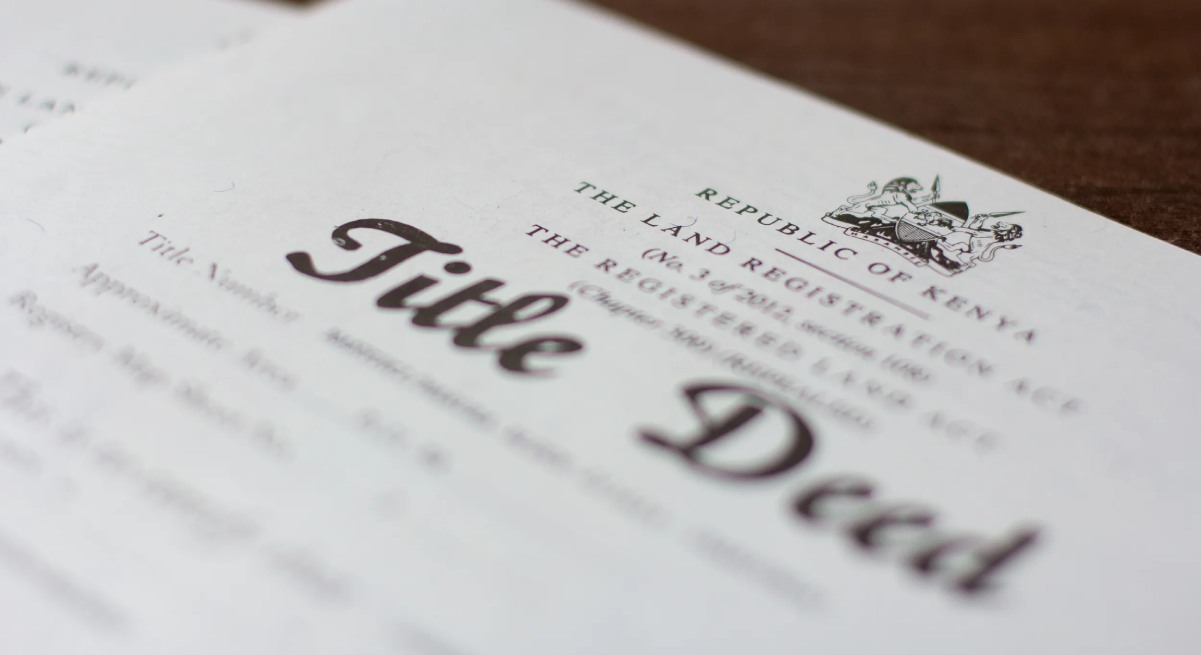
Not all land titles are equal in Kenya, and this is a point many buyers — especially those who haven’t been following changes in the law — miss entirely.
Following the Land Registration Act 2012, Kenya moved to a unified title system. Here’s what you need to know:
- Freehold Title (Grant/Absolute Title):
You own the land outright, indefinitely. There’s no lease period and no renewal required. This is the strongest form of ownership.
- Leasehold Title:
You hold rights to the land for a defined period — typically 99 years. At the end of the lease, ownership reverts to the government unless renewed. This is common in urban areas and for commercial land.
- Allotment Letters / Agreement for Sale:
These are not title deeds. They indicate an agreement to purchase, not a completed transfer of ownership. If someone is selling you land using only an allotment letter, the full conveyancing process has not been completed. Be cautious.
Always ask: What type of title does the land carry? And ask your advocate to confirm it independently.
Step 5: Review the Payment Process Carefully
How you pay matters as much as what you’re paying for. Here’s how a clean payment process should look:
- Payments should go to a company account — not a personal mobile money number or an individual’s bank account.
- You should receive an official receipt for every payment made, on company letterhead with a reference number.
- The sale agreement should clearly outline the payment plan, deadlines, penalties for default, and what happens if the developer fails to deliver the title deed.
- For large amounts, consider paying through a law firm’s client account (escrow-style), where funds are only released to the seller once specific conditions are met.
- Never send a ‘commitment fee’ or ‘reservation deposit’ before you’ve reviewed the title search results and had your lawyer vet the agreement.
💡 Practical Tip: Ask the company for their official bank account details in writing via their registered email address. Cross-check the account name with the company’s registration details before sending any money.
Step 6: Sign the Sale Agreement

Once due diligence is complete and you’re satisfied with the land search, the survey map, the title type, and the payment structure, you move to the sale agreement.
The sale agreement is the legally binding document that governs the transaction. Your advocate will review it, negotiate any terms on your behalf, and advise you before you sign. Key things the agreement should cover:
- Accurate description of the plot (plot number, acreage, location, title reference).
- Agreed on the purchase price, payment schedule, and mode of payment.
- Timeline for completion and transfer of title.
- What happens if either party defaults?
- Warranties from the seller about the title being free of encumbrances.
If you’re abroad, you can sign documents via a Commissioner for Oaths in your country of residence, or through a Power of Attorney granted to your advocate or a trusted family member in Kenya. Your lawyer will guide you through this process.
Step 7: Transfer of Ownership and Title Deed Collection
The final stage is the formal transfer of ownership at the Land Registry — this is where the title deed is officially transferred from the seller’s name into yours. Your advocate handles this process, which involves:
- Preparing the transfer documents.
- Payment of stamp duty (currently 2% of the property value for rural land in Kenya).
- Lodging the transfer at the Land Registry.
- Collection of the new title deed in your name.
From the time documents are lodged to the time the title is issued, the process can take anywhere from a few weeks to a few months, depending on the specific registry and how smoothly the process runs. A reputable developer will keep you updated throughout.
Once the title deed is in your name and confirmed at the Land Registry, the land is yours — legally, unambiguously, on record.
Common Scam Patterns to Know
Beyond the step-by-step, it helps to recognise the specific patterns that come up repeatedly in diaspora land fraud. These are the ones to watch:
The ‘Limited Time Offer’ Push
‘We only have two plots left, and someone else is interested — you need to decide today.’ Urgency is a sales tactic that, when pushed hard enough, becomes a manipulation tactic. Genuine land doesn’t disappear overnight. A reputable company will give you the time you need to do due diligence.
The Trusted Middleman Scam
A relative or family friend approaches you on behalf of a developer or sells you land privately. Because you trust the person, you skip the due diligence steps. This is one of the most common ways diaspora buyers get conned — not by strangers, but by people they know.
The Title Deed Photocopy
You’re shown a copy of a title deed as proof of ownership. Copies can be forged. Always insist on a land search conducted directly at the Land Registry, not just a copy of a document the seller hands you.
The Off-Plan Ghost
You buy into a project that doesn’t yet have all the necessary approvals, and then the developer stalls, disappears, or folds. Before buying into any development, confirm that the project has planning approvals from the relevant county government and that the developer has a track record of delivering completed projects.
Double Selling
The same plot is sold to multiple buyers, usually through different agents or brokers. This is why the land search step is critical — it reveals whether any existing transactions or caveats are already registered against the land.
Your Quick Reference Checklist
Before you commit, run through this list:
- Verified the company is registered on brs.go.ke
- Confirmed the physical office address independently
- Requested and reviewed the land search results
- Matched the survey map to the plot being sold
- Done a virtual or physical site visit
- Engaged an independent licensed advocate (verified on lsk.or.ke)
- Confirmed the title type and that the land is free of encumbrances
- Reviewed the sale agreement with your lawyer
- Confirmed payment is going to a company bank account — not a personal number
- Received official receipts for all payments
- Confirmed the transfer and title issuance timeline in writing
A Final Word
Buying land from abroad is genuinely possible. Thousands of Kenyans in the diaspora do it every year — safely, successfully, and without regret. The process we’ve laid out here isn’t complicated. It just requires patience, the right people around you, and a willingness to slow down when the deal feels too rushed.
The single most expensive shortcut in real estate is skipping due diligence. The steps above exist to protect you, and none of them should be optional.
The best investment you’ll ever make is taking the time to do it right the first time.
At Wilper Ventures, we work specifically with diaspora buyers, and we’ve built our process around making the remote buying experience straightforward and secure. We offer virtual site visits, transparent documentation, independent title deed verification, and a step-by-step client journey from first conversation to title deed in hand.
If you have questions about buying land at Neema Gardens or want to understand the process before you commit to anything, reach out to us directly. No pressure, no artificial urgency — just honest answers.



Join The Discussion